Learning doesn’t only happen at school or during structured activities. For children, some of the most powerful lessons come from everyday moments — brushing teeth, helping in the kitchen, getting dressed, or talking about the day.
When parents and caregivers recognize the educational value of daily routines, they can turn ordinary moments into meaningful learning experiences without pressure, extra time, or special materials.
This article shows how to transform daily life into a natural learning environment that supports your child’s development in a calm and practical way.
Learning Happens All the Time
Children are naturally curious. They observe, imitate, and experiment constantly. When adults slow down and engage with these moments, learning becomes effortless and enjoyable.
Daily-life learning helps children:
- Develop problem-solving skills
- Improve language and communication
- Build independence
- Understand cause and effect
- Gain confidence
The key is awareness, not perfection.
The Power of Everyday Routines
Routines provide predictability, which makes children feel safe and open to learning.
Common routines with learning potential include:
- Morning routines
- Mealtimes
- Playtime
- Chores
- Bedtime rituals
Each of these moments can support cognitive, emotional, and social development.
Turning Morning Routines into Learning Moments
Mornings are full of opportunities:
- Naming clothing items and colors
- Counting buttons or socks
- Talking about the weather
- Choosing between two options
These simple interactions build language skills, decision-making, and independence.
Learning Through Household Chores
Chores teach responsibility, sequencing, and cooperation.
Examples:
- Sorting laundry by color
- Matching socks
- Setting the table
- Wiping surfaces
Involve your child at an age-appropriate level and focus on participation, not perfection.
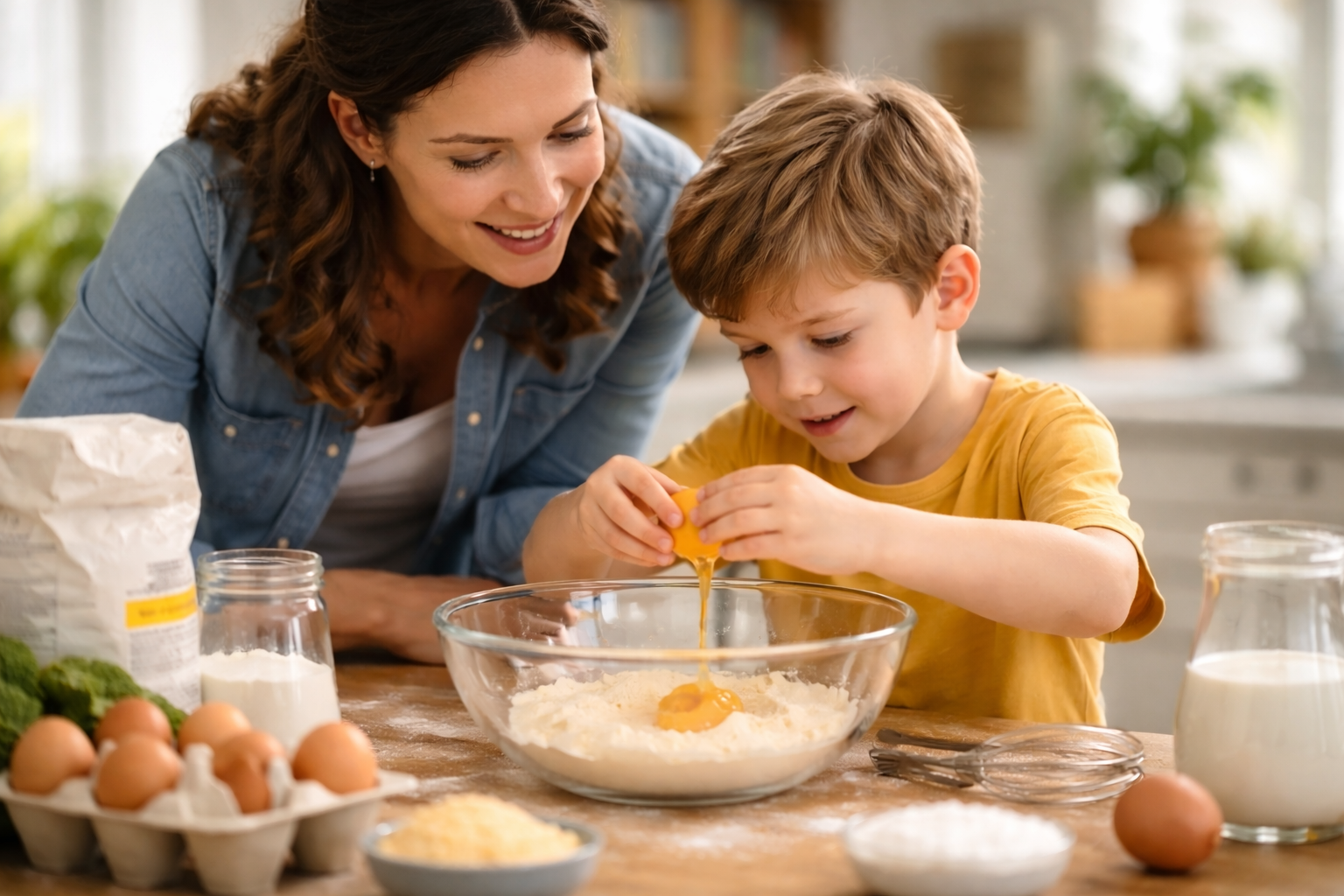
Cooking Together as a Learning Experience
The kitchen is a powerful learning space.
Cooking helps children learn:
- Counting and measuring
- Following instructions
- Vocabulary
- Patience and focus
Even small tasks like stirring or washing vegetables provide valuable lessons.
Use Language to Support Learning
Narrating what you’re doing helps children connect words with actions.
For example:
- “I’m cutting the apple in half.”
- “First we clean up, then we read a book.”
This strengthens language development and comprehension.
Ask Questions That Encourage Thinking
Instead of giving answers right away, ask simple questions:
- “What do you think will happen next?”
- “How could we fix this?”
- “Why do you think that happened?”
These questions encourage curiosity and problem-solving.
Play Is One of the Best Teachers
Play is not a break from learning — it is learning.
Through play, children develop:
- Creativity
- Social skills
- Emotional regulation
- Cognitive flexibility
Follow your child’s lead and join their play when possible.
Learning During Errands and Outings
Daily outings offer real-world learning:
- Counting items at the store
- Talking about money
- Identifying signs and colors
- Practicing patience
These experiences connect learning to real life.
Bedtime as a Moment for Reflection
Bedtime is ideal for emotional learning.
Try:
- Talking about the best part of the day
- Naming feelings
- Reading stories and discussing them
These moments support emotional intelligence and strengthen connection.
Avoid Turning Everything into a Lesson
Learning should feel natural, not forced.
Avoid:
- Constant quizzing
- Correcting every mistake
- Turning play into instruction
Sometimes observation and shared presence are enough.
Encourage Curiosity, Not Perfection
Children learn best when they feel safe to explore and make mistakes.
Celebrate:
- Effort
- Curiosity
- Trying something new
Mistakes are part of learning.
Adapt Learning to Your Child’s Age
Learning moments should match developmental stages.
Younger children benefit from:
- Repetition
- Simple explanations
- Hands-on experiences
Older children enjoy:
- Deeper conversations
- Responsibility
- Problem-solving
Your Role as a Learning Guide
You don’t need to be a teacher — just an engaged guide.
Your role is to:
- Be present
- Ask questions
- Offer encouragement
- Model curiosity
Your attitude toward learning matters more than any activity.
Small Moments Create Big Impact
Daily moments may seem small, but over time they shape how children see learning.
When learning feels safe, natural, and connected to real life, children develop a lifelong love for discovery.
Learning Is a Way of Living
By turning everyday routines into learning opportunities, you show your child that learning is not limited to books or classrooms — it’s part of life itself.
And that lesson lasts forever.