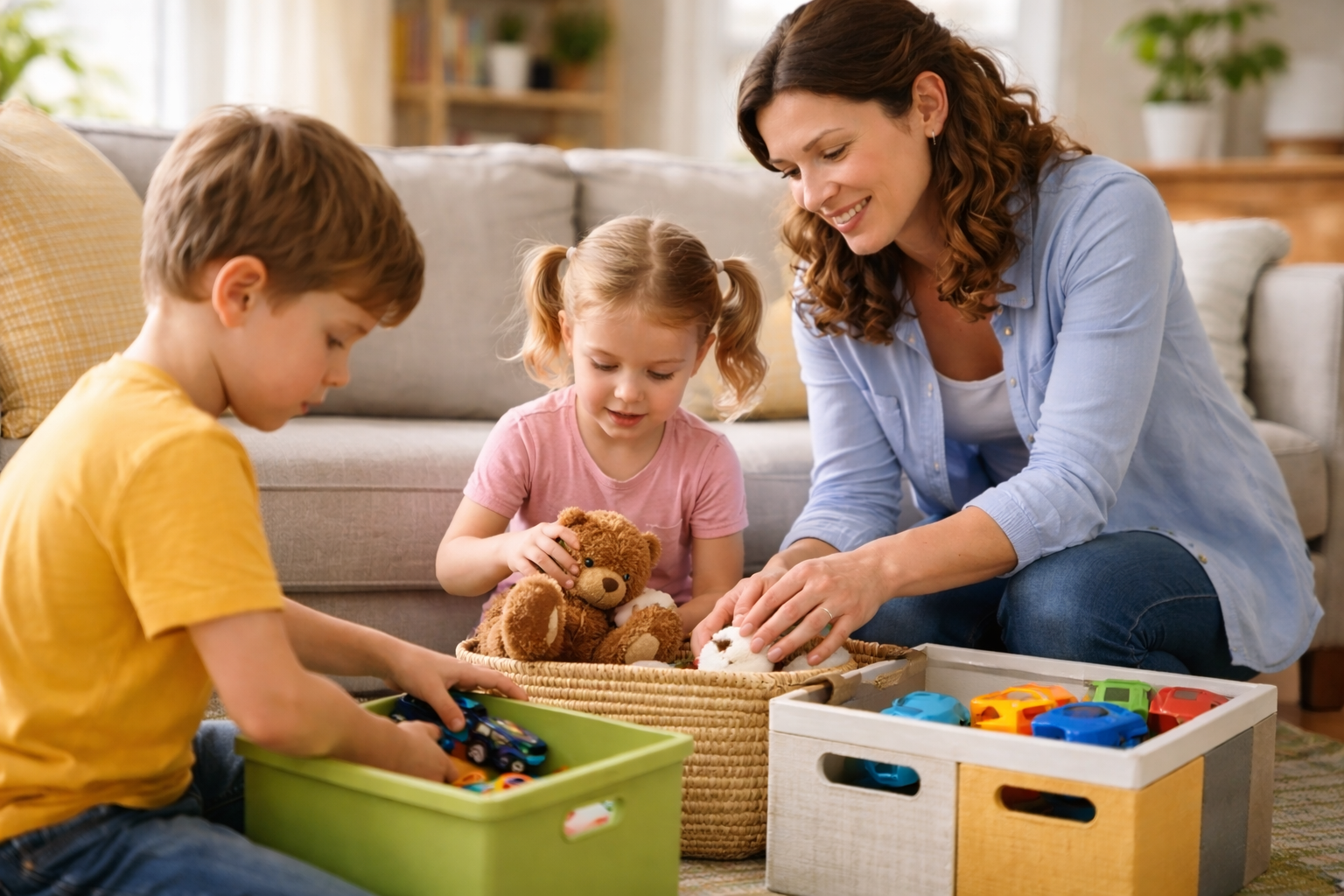
Keeping a home organized with children can feel overwhelming. Toys appear everywhere, routines change constantly, and clutter seems to return no matter how often you tidy up. The truth is: organization with children looks different than it did before — and that’s okay.
An organized home with kids is not about perfection or spotless rooms. It’s about creating systems that support daily life, reduce stress, and help children learn responsibility and independence along the way.
This article will show practical, realistic ways to maintain organization in a home with children — without pressure, guilt, or unrealistic expectations.
Redefining What “Organized” Really Means
When children are part of the household, organization must be flexible.
An organized home with kids is:
- Functional, not perfect
- Adapted to daily routines
- Easy to reset, not always tidy
- Supportive of children’s independence
Letting go of unrealistic standards is the first step toward sustainable organization.
Why Organization Matters for Children
An organized environment benefits children as much as adults.
It helps children:
- Feel calmer and more secure
- Know where things belong
- Develop responsibility
- Build independence
- Improve focus and behavior
Organization creates predictability — and predictability creates emotional safety.
Start with Fewer Items
Too many toys, clothes, and objects make organization harder.
Try:
- Rotating toys instead of keeping all available
- Donating items no longer used
- Limiting duplicates
Fewer items mean:
- Easier cleanup
- Less overwhelm
- More meaningful play
Children engage more deeply when they have fewer choices.
Create Simple Storage Systems
Complex systems don’t work with kids. Simplicity is key.
Effective storage should be:
- Easy to access
- Easy to return items to
- Clearly labeled
Use:
- Bins instead of lids
- Open shelves
- Picture labels for younger children
If a child can’t put something away independently, the system needs adjusting.
Give Everything a Clear Home
Every item should have a designated place.
Ask yourself:
- Where does this belong?
- Is it easy to put away?
- Does it make sense for my child’s age?
Clear homes for items reduce clutter and daily decision fatigue.
Involve Children in Organization
Children are more likely to respect systems they help create.
Involve them by:
- Choosing where toys go
- Sorting clothes
- Labeling bins
- Helping with small decisions
This builds ownership and cooperation.
Create Daily Reset Routines
Instead of cleaning all day, focus on short “reset” moments.
Examples:
- 10-minute tidy before dinner
- Toy cleanup before bedtime
- Quick reset after playtime
Short, consistent resets prevent mess from building up.
Organize by Zones, Not Rooms
Think in terms of activity zones:
- Play zone
- Reading zone
- Art zone
- Homework zone
Zones help children understand expectations and limits within shared spaces.
Keep Organization Age-Appropriate
What works for older children won’t work for toddlers.
For Younger Children:
- Fewer categories
- Larger bins
- Visual labels
For Older Children:
- Drawers and shelves
- Responsibility for their own spaces
- Simple checklists
Adjust systems as children grow.
Make Cleanup Part of the Routine
Cleanup should be predictable, not a punishment.
Use:
- Songs or timers
- Clear cues (“Cleanup time”)
- Consistent expectations
Routine makes cleanup less emotional and more automatic.
Avoid Organizing During Emotional Moments
Trying to organize during stress leads to frustration.
Instead:
- Organize when calm
- Reset when emotions settle
- Focus on progress, not perfection
Organization should support peace, not create conflict.
Teach Responsibility Through Organization
Organization is a powerful teaching tool.
Children learn:
- Where things belong
- How to care for belongings
- The value of shared spaces
Start small and build gradually.
Use Visual Reminders
Visual cues help children remember systems.
Try:
- Picture charts
- Color-coded bins
- Labels at eye level
Visual reminders reduce verbal reminders and power struggles.
Be Realistic About Shared Spaces
Living rooms, kitchens, and hallways are used by everyone.
Allow:
- Some flexibility
- Temporary mess
- Shared responsibility
Focus on restoring order, not maintaining perfection all day.
Model Organizational Habits
Children learn by watching.
Model:
- Putting things back
- Tidying calmly
- Maintaining routines
Your behavior teaches more than instructions.
Let Go of Guilt and Comparison
Every family is different.
Avoid:
- Comparing your home to others
- Social media pressure
- Unrealistic expectations
A lived-in home with children is normal — and healthy.
Organization Supports Emotional Well-Being
A functional, organized home:
- Reduces daily stress
- Improves family flow
- Creates calmer transitions
- Supports emotional regulation
Organization is not about control — it’s about support.
Small Systems Make a Big Difference
You don’t need a full home makeover.
Start with:
- One drawer
- One shelf
- One routine
Small changes create momentum.
A Home That Works for Your Family
An organized home with children is one that adapts to your family’s needs — not one that follows strict rules.
When systems are simple, flexible, and shared, organization becomes a tool for connection rather than conflict.
And that’s when it truly works.