Self-control is one of the most important skills children develop — but it is also one of the most misunderstood. Many people associate self-control with silence, obedience, or emotional suppression. In reality, healthy self-control has nothing to do with ignoring feelings and everything to do with managing them safely.
Children are not born with self-control. It develops gradually as their brains mature and as they receive consistent guidance and emotional support. This article explores practical, non-medical ways to help children develop self-control without suppressing emotions or creating fear-based behavior.
What Self-Control Really Means for Children
Self-control does not mean “never getting upset.”
For children, self-control means learning to:
- Pause before reacting
- Express emotions safely
- Follow limits even when frustrated
- Recover after emotional moments
- Make better choices over time
Self-control is a skill built through practice, not pressure.
Why Emotional Suppression Backfires
When children are taught to suppress emotions:
- Feelings build internally
- Emotional outbursts become more intense later
- Children feel misunderstood or ashamed
- Self-regulation skills fail to develop
Children need to feel emotions in order to learn how to manage them.
Emotions and Behavior Are Not the Same
A key lesson for self-control is separating feelings from actions.
Teach children:
- All emotions are allowed
- Not all behaviors are acceptable
For example:
- “It’s okay to feel angry.”
- “It’s not okay to hit.”
This distinction builds accountability without emotional harm.
Start with Emotional Awareness
Children cannot regulate emotions they don’t understand.
Support awareness by:
- Naming emotions
- Reflecting feelings
- Using emotional language daily
Examples:
- “You’re frustrated.”
- “That felt unfair.”
Awareness is the first step toward control.
Co-Regulation Comes Before Self-Control
Young children borrow regulation from adults.
Co-regulation includes:
- Calm tone
- Physical presence
- Emotional validation
Before children can calm themselves, they must experience being calmed.
Model Self-Control in Real Time
Children learn self-control by watching adults handle stress.
Model:
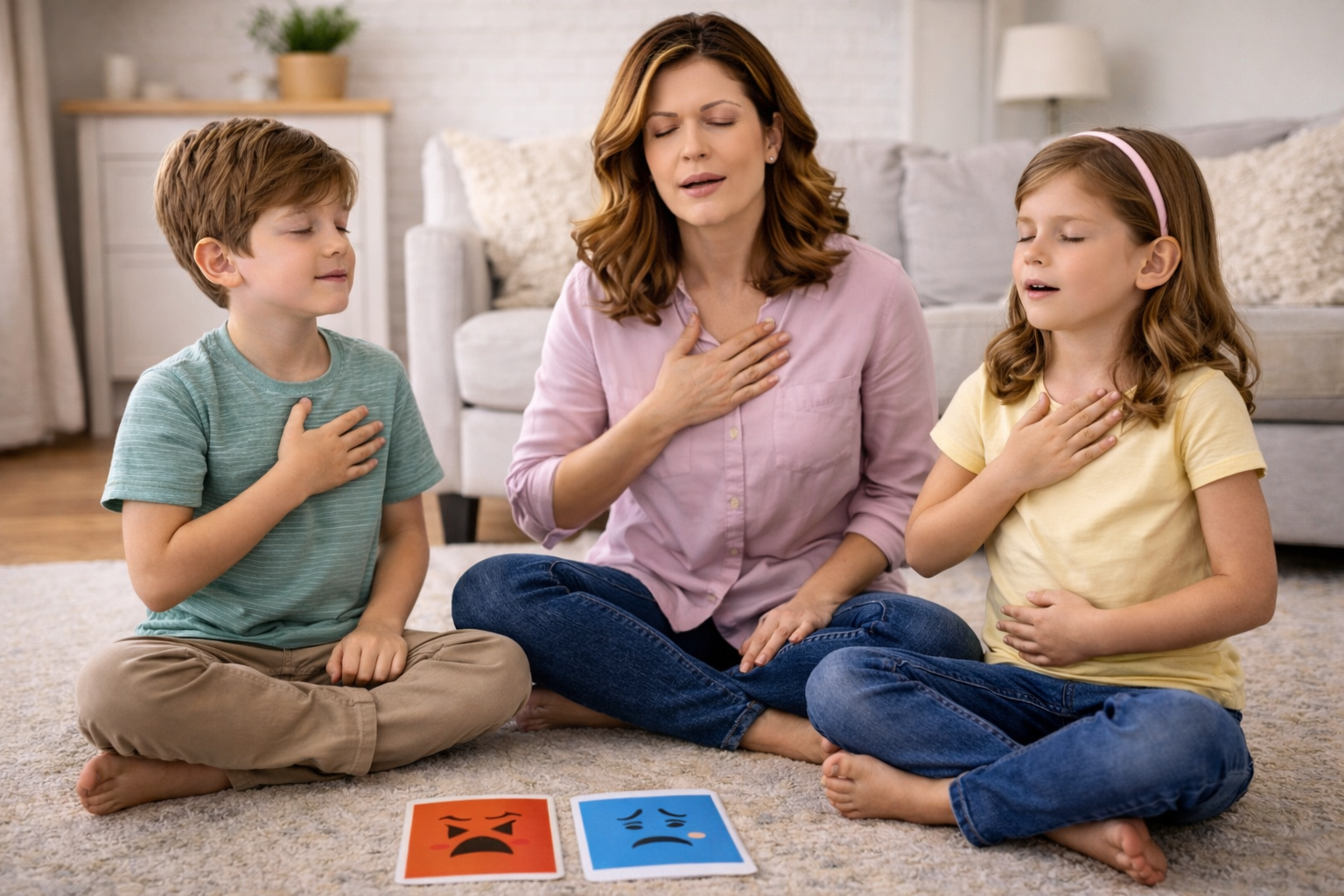
- Taking deep breaths
- Pausing before responding
- Naming your emotions
For example:
“I’m feeling frustrated, so I’m going to take a breath.”
Your behavior becomes their blueprint.
Teach Pause Strategies
Self-control requires pausing between emotion and action.
Teach simple pause tools:
- Breathing together
- Counting slowly
- Putting hands on the belly
- Stepping away briefly
Practice these tools during calm moments.
Avoid Demanding Calmness
Commands like “Calm down” often increase distress.
Instead:
- Acknowledge feelings
- Offer support
- Guide regulation
Calm cannot be forced — it is supported.
Use Clear, Consistent Limits
Limits provide structure for self-control.
Children feel safer when limits are:
- Predictable
- Calmly enforced
- Explained simply
Consistency supports learning.
Help Children Recover After Losing Control
Loss of control is part of learning.
After emotions settle:
- Reconnect emotionally
- Talk briefly about what happened
- Discuss what could help next time
Recovery builds skill.
Avoid Shaming Emotional Struggles
Shame shuts down regulation.
Avoid phrases like:
- “What’s wrong with you?”
- “You should know better.”
Instead:
- Offer guidance
- Encourage learning
Children learn best when they feel safe.
Teach Responsibility Alongside Support
Self-control grows when children are supported and expected to behave safely.
Balance:
- Emotional validation
- Behavioral expectations
Both are necessary.
Encourage Delayed Responses
Help children practice waiting before reacting:
- Waiting to speak
- Waiting for a turn
- Waiting before touching
Small delays build control.
Use Daily Life as Practice
Everyday moments offer training:
- Sibling conflicts
- Turn-taking
- Disappointment
- Frustration
Treat these moments as practice, not failure.
Adjust Expectations by Development
Young children:
- Need heavy support
- Have limited impulse control
Older children:
- Can practice more independence
- Still need guidance
Expect progress, not perfection.
Praise Effort Toward Control
Notice attempts:
- “You stopped yourself.”
- “You took a breath.”
- “You tried again.”
Specific praise reinforces skill-building.
Teach That Self-Control Improves Over Time
Children need hope.
Remind them:
- Skills grow with practice
- Everyone struggles sometimes
- Progress matters
This builds resilience.
Self-Control Builds Emotional Strength
Children who develop healthy self-control:
- Regulate emotions more effectively
- Build stronger relationships
- Make better decisions
- Feel more confident
These skills support success throughout life.
Teaching Self-Control Is a Daily Process
There is no shortcut.
Self-control develops through:
- Daily modeling
- Calm boundaries
- Emotional support
- Repetition
Every emotional moment contributes.
Raising Children with Strong Self-Control and Emotional Health
Children don’t need their emotions silenced to behave well.
They need adults who:
- Understand emotions
- Guide behavior
- Stay calm and consistent
By teaching self-control with empathy and structure, you help children build skills that last far beyond childhood.
And that balance shapes emotionally healthy adults.