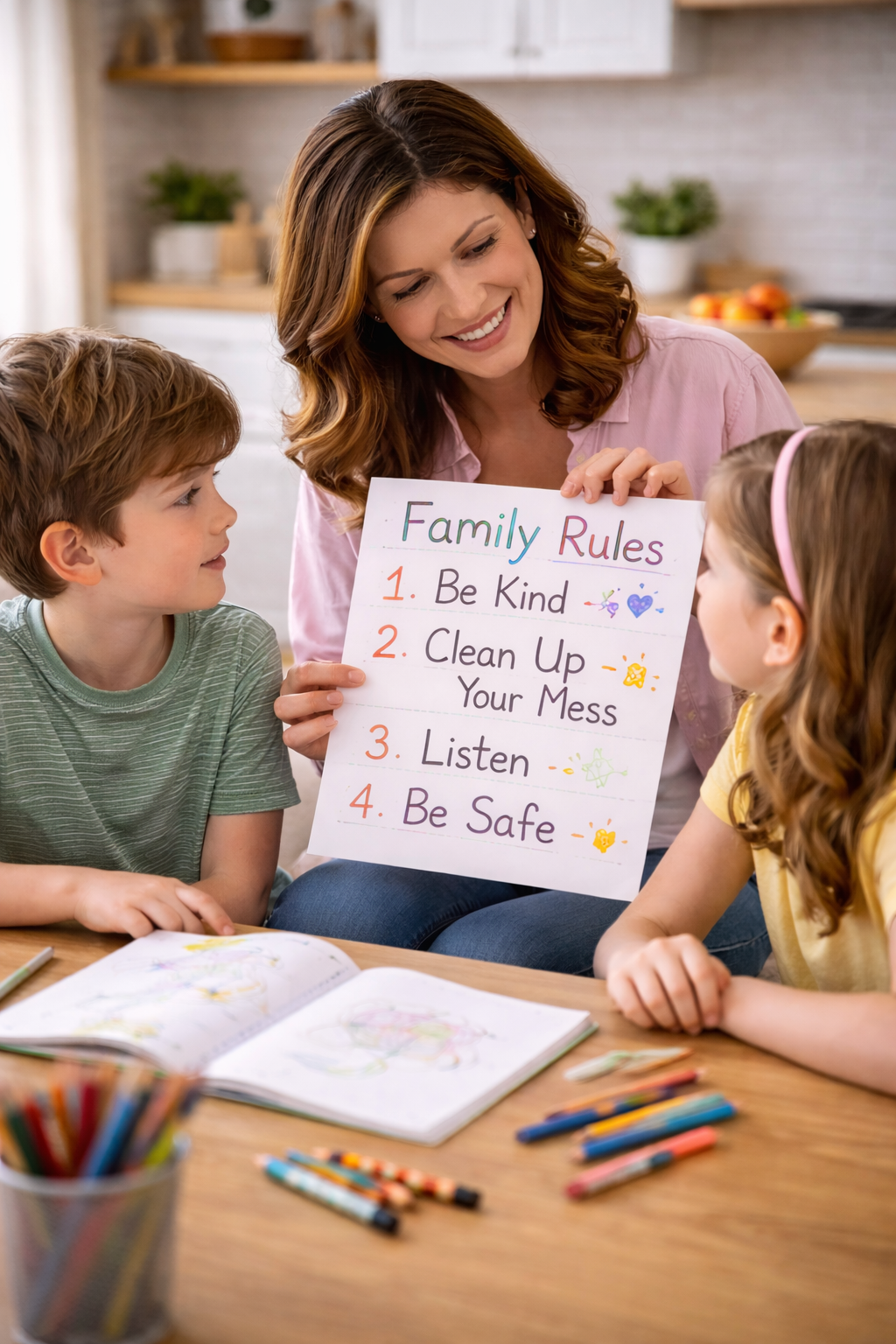
Rules and limits are an essential part of family life, but many children grow to see them as punishments, power struggles, or obstacles to freedom. When rules are imposed with fear, inconsistency, or excessive control, children may resist, rebel, or comply only when supervised.
A healthy relationship with rules is different. Children can learn that rules exist to protect, guide, and support everyone — not to control or diminish them. This article explores practical, non-medical ways to help children develop a positive, cooperative relationship with rules and limits in everyday life.
Why Children Often Resist Rules
Resistance to rules is developmentally normal.
Children resist limits because:
- They are learning autonomy
- They test boundaries to understand them
- Emotions override logic
- They seek control and predictability
Resistance does not mean disrespect — it means learning is happening.
Rules Are More Effective When They Feel Fair
Children are more willing to follow rules they perceive as fair and consistent.
Rules feel fair when:
- They are predictable
- They apply consistently
- They make sense for safety or respect
Unclear or changing rules increase resistance.
Explain the Purpose Behind Rules
Children cooperate more when they understand why a rule exists.
Instead of:
- “Because I said so.”
Try:
- “This rule keeps everyone safe.”
- “This helps our home work better.”
Purpose turns rules into guidance, not control.
Keep Rules Simple and Limited
Too many rules overwhelm children.
Focus on a small number of core rules related to:
- Safety
- Respect
- Responsibility
Simple rules are easier to remember and follow.
Be Consistent Without Being Rigid
Consistency builds trust.
This means:
- Following through calmly
- Responding predictably
- Adjusting rules thoughtfully, not impulsively
Flexibility within consistency supports cooperation.
Model Respect for Rules Yourself
Children notice adult behavior.
Model:
- Following household rules
- Respecting boundaries
- Taking responsibility when mistakes happen
Rules carry more weight when adults live by them too.
Use Calm Authority Instead of Power Struggles
Power struggles weaken the effectiveness of rules.
Use calm authority by:
- Staying emotionally steady
- Repeating the rule without arguing
- Avoiding threats or ultimatums
Calm leadership creates security.
Validate Feelings Without Removing Limits
Children can dislike a rule and still follow it.
For example:
- “I know you’re upset. The rule stays the same.”
- “You’re disappointed. I understand.”
Validation supports emotions while maintaining boundaries.
Avoid Using Rules as Punishment
Rules are not punishments.
When rules are framed as punishment, children may:
- Feel controlled
- Resist more
- Follow rules only out of fear
Rules should guide behavior, not shame it.
Involve Children When Appropriate
As children grow, involving them builds cooperation.
You can:
- Discuss rules together
- Ask for input
- Adjust age-appropriate expectations
Involvement builds ownership.
Use Natural Consequences to Reinforce Rules
Natural consequences help rules make sense.
Examples:
- Toys left out are put away
- Rough play ends the activity
Natural consequences feel logical and fair.
Avoid Over-Explaining in Emotional Moments
When emotions are high, long explanations don’t work.
Use:
- Short reminders
- Calm repetition
Save deeper discussions for calm times.
Praise Cooperation, Not Compliance
Notice when children follow rules thoughtfully.
Say:
- “You remembered the rule.”
- “You respected the limit.”
This reinforces understanding rather than obedience.
Teach That Rules Can Evolve
Rules change as children grow.
Explain that:
- More responsibility brings more freedom
- Rules adjust with age and maturity
This builds trust and motivation.
Handle Rule-Breaking as Learning
Rule-breaking is part of learning.
Respond by:
- Staying calm
- Restating the rule
- Guiding behavior
Avoid harsh reactions that create fear.
Create a Predictable Home Environment
Predictability reduces rule-testing.
Support predictability through:
- Routines
- Clear expectations
- Consistent responses
Children feel safer in structured environments.
Avoid Comparing Rules Across Families
Statements like “Other kids don’t do this” create resentment.
Focus on:
- Your family’s values
- Your household needs
This keeps rules meaningful.
Teach Respect for Limits Outside the Home
Help children generalize rules by:
- Talking about school rules
- Explaining public expectations
- Modeling respectful behavior
Consistency across environments builds understanding.
Encourage Questions About Rules
Questions show curiosity, not defiance.
Encourage children to:
- Ask why
- Share feelings
- Express concerns
Conversation builds cooperation.
Rules Build Independence Over Time
Well-guided rules teach children:
- Self-regulation
- Responsibility
- Respect for others
Eventually, external rules become internal ones.
Raising Children Who Respect Rules Without Fear
Children don’t need rigid control to respect limits.
They need:
- Clear expectations
- Calm leadership
- Emotional support
When rules are consistent, fair, and respectful, children learn to see them not as obstacles — but as guides that help life run smoothly.
And that understanding stays with them long after childhood.