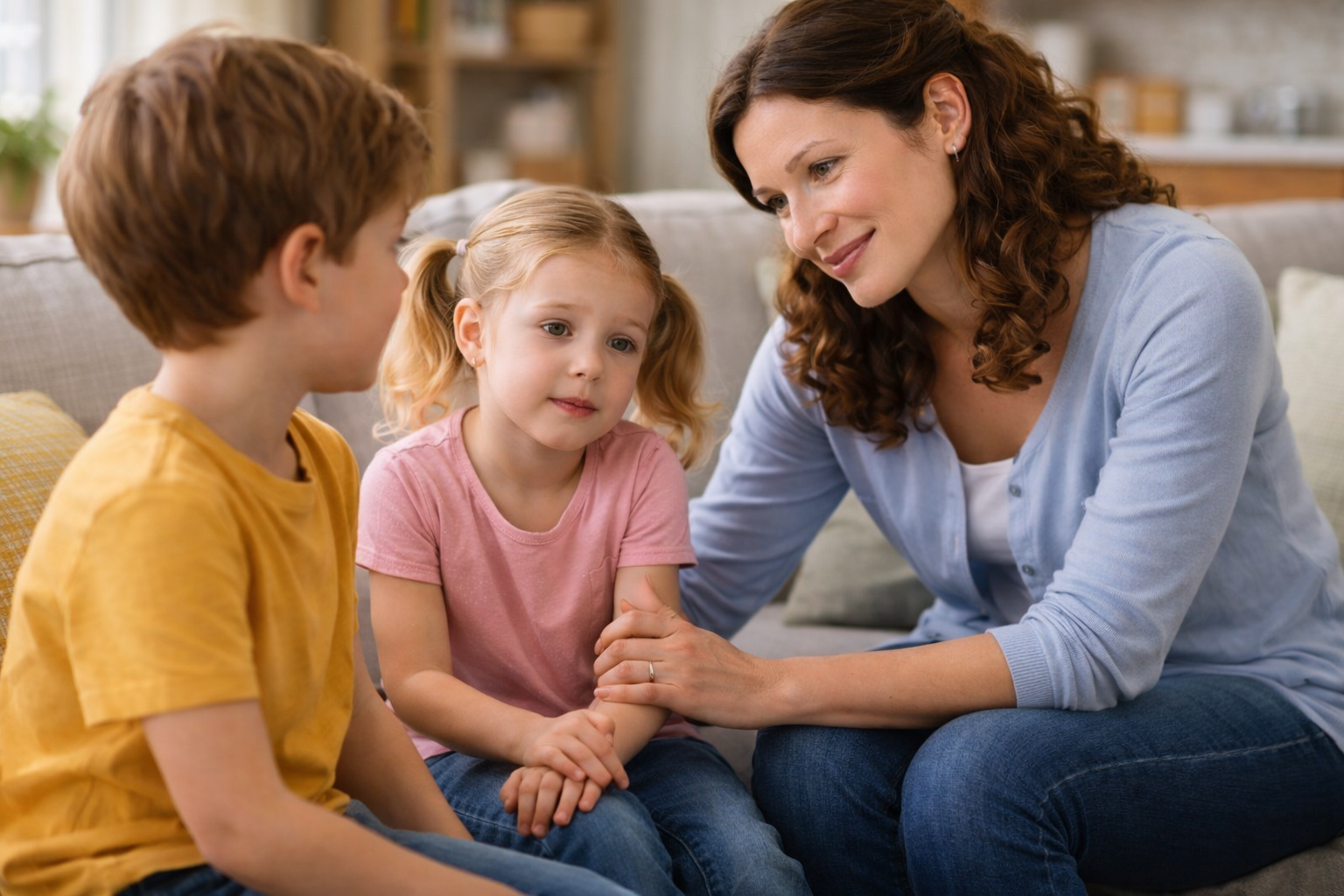
Empathy and respect are essential skills for healthy relationships and social development. Children who learn to understand others’ feelings, respect differences, and treat people with kindness grow into adults who navigate the world with compassion and responsibility.
The foundation for empathy and respect is built early — not through lectures, but through daily interactions, modeling, and gentle guidance. This article explores practical ways to nurture these values in children in everyday life.
What Empathy and Respect Really Mean for Children
Empathy is the ability to recognize and understand how others feel. Respect is treating others with consideration, fairness, and kindness.
For children, these skills show up as:
- Caring when someone is upset
- Waiting their turn
- Using polite language
- Respecting boundaries
- Showing kindness to people and animals
These behaviors develop gradually and require consistent support.
Why Empathy Matters in Childhood
Empathy helps children:
- Build stronger friendships
- Resolve conflicts peacefully
- Develop emotional intelligence
- Understand different perspectives
- Feel connected to others
Children who feel understood are more likely to understand others.
Respect Starts with Feeling Respected
Children learn respect by experiencing it.
Show respect by:
- Listening to your child
- Speaking calmly
- Acknowledging feelings
- Treating them as individuals
When children feel respected, they naturally learn to offer respect in return.
Model Empathy in Daily Life
Children watch how adults treat others.
Model empathy by:
- Talking about feelings
- Showing concern for others
- Apologizing when needed
- Responding kindly to mistakes
Your daily behavior is their most powerful lesson.
Name and Normalize Emotions
Children can’t show empathy if they don’t understand emotions.
Help them by:
- Naming feelings (“You look sad”)
- Validating emotions (“That was hard”)
- Talking about how actions affect others
Emotional awareness is the foundation of empathy.
Use Everyday Moments to Teach Empathy
Simple situations offer learning opportunities:
- A sibling is upset
- A friend feels left out
- A pet needs care
Ask gentle questions:
- “How do you think they feel?”
- “What could help right now?”
This encourages perspective-taking.
Encourage Kind Actions
Kindness reinforces empathy.
Encourage:
- Helping others
- Sharing
- Offering comfort
- Saying thank you
Praise the action, not the child’s identity:
- “That was a kind choice.”
Teach Respect Through Boundaries
Respect includes understanding limits — one’s own and others’.
Teach children to:
- Respect personal space
- Listen when others speak
- Accept “no” gracefully
Boundaries teach children that everyone deserves respect.
Address Disrespect Calmly
When disrespectful behavior occurs:
- Stay calm
- Address it immediately
- Explain expectations clearly
Avoid shaming. Focus on learning and repair.
Use Stories and Books
Stories help children explore emotions safely.
Choose books that:
- Show diverse perspectives
- Highlight kindness and cooperation
- Discuss emotions and problem-solving
Discuss characters’ feelings and choices together.
Encourage Apologies and Repair
Empathy grows when children learn to repair mistakes.
Teach them to:
- Acknowledge harm
- Apologize sincerely
- Make amends
Focus on understanding, not forced apologies.
Practice Gratitude and Appreciation
Gratitude supports respect.
Simple practices include:
- Thanking others
- Acknowledging help
- Reflecting on positive moments
Gratitude encourages awareness of others.
Respect Differences and Diversity
Children learn respect for diversity through exposure and conversation.
Talk openly about:
- Different cultures
- Abilities
- Family structures
Normalize differences and answer questions calmly.
Avoid Labels and Comparisons
Labels like “mean” or “rude” focus on identity rather than behavior.
Instead:
- Address specific actions
- Guide better choices
- Encourage reflection
This keeps dignity intact.
Create a Kind Home Culture
Empathy grows best in supportive environments.
Build a culture that values:
- Listening
- Cooperation
- Emotional safety
- Mutual respect
Children absorb what they live.
Be Patient with the Learning Process
Empathy and respect take time to develop.
Expect:
- Repetition
- Mistakes
- Growth over time
Consistency matters more than perfection.
Empathy Is a Lifelong Skill
Teaching empathy and respect is one of the greatest gifts you can give your child.
These skills support:
- Healthy relationships
- Emotional resilience
- Social responsibility
And they begin at home, one interaction at a time.