How to Reduce Sibling Rivalry and Foster Cooperation at Home
Sibling rivalry is a normal part of family life. Even in loving homes, siblings argue, compete, provoke each other, and fight for attention. These conflicts can be exhausting for parents and caregivers, especially when they happen repeatedly throughout the day. However, sibling rivalry is not a sign of failure in parenting — it is a … Ler mais
How to Teach Children Respect Through Everyday Interactions

Respect is one of the most important values children carry into adulthood. It shapes how they treat others, how they communicate, and how they see themselves. Contrary to what many people think, respect is not learned through fear, strictness, or obedience. It is learned through daily interactions, modeling, and consistent guidance. Children don’t learn respect … Ler mais

How to Help Children Develop Emotional Resilience in Everyday Situations

Emotional resilience is the ability to face challenges, handle stress, recover from difficulties, and keep going even when things don’t go as planned. For children, resilience is not about “being strong” or hiding emotions — it’s about learning that difficult feelings are manageable and temporary. Resilient children are not those who never struggle. They are … Ler mais

How to Build a Family Routine That Truly Works (and Actually Reduces Stress)

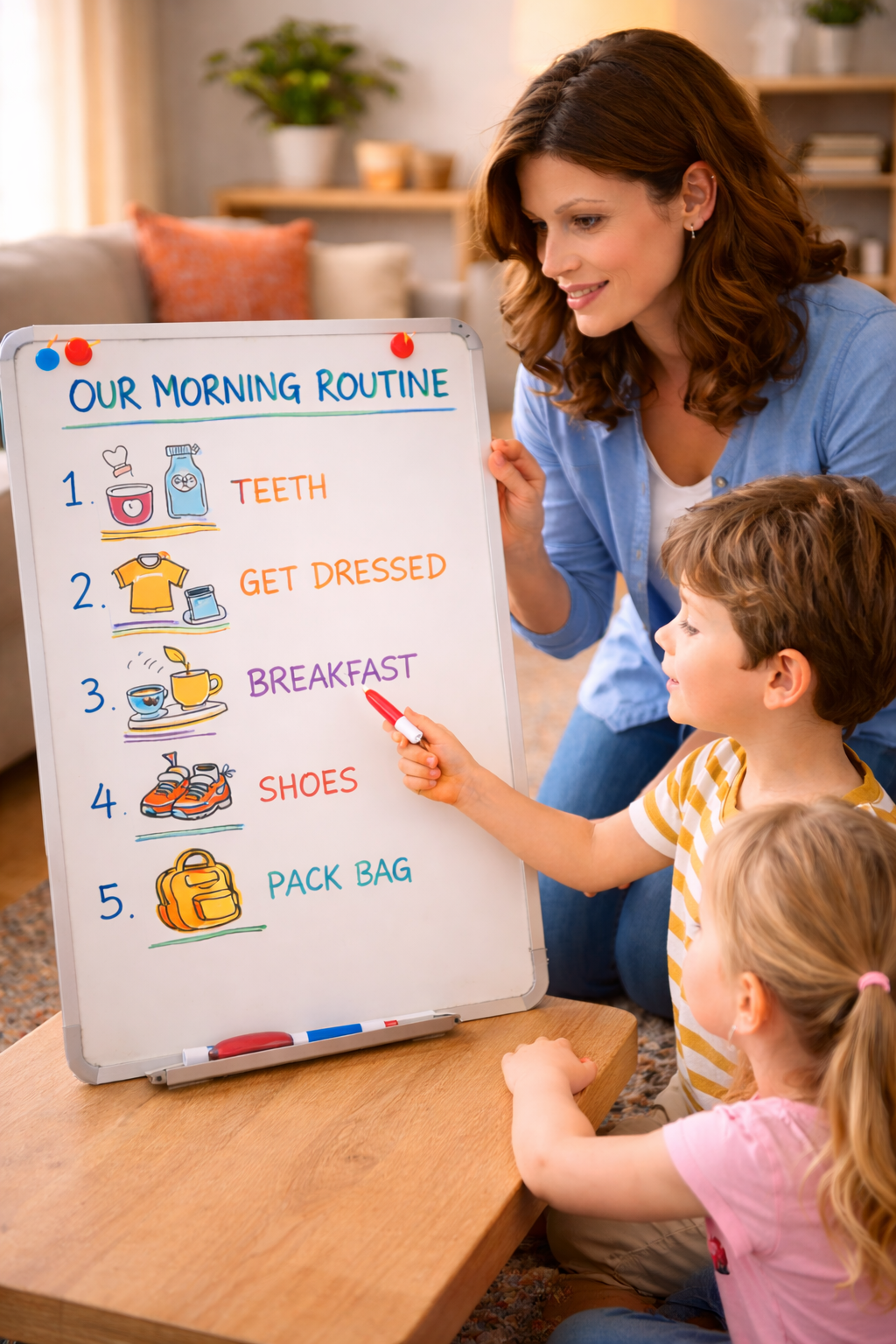
Family routines are often recommended as the solution to chaos at home. But many parents try routines that feel rigid, exhausting, or impossible to maintain. After a few days, everything falls apart — and frustration takes over. The truth is that a routine only works when it fits real life. A successful family routine is … Ler mais

How to Help Children Develop Self-Control in Daily Situations

Self-control is a skill that takes years to develop. Children are not born knowing how to wait, pause, or manage impulses — these abilities are built gradually through guidance, repetition, and supportive environments. Helping children develop self-control does not mean demanding silence, obedience, or emotional suppression. It means teaching them how to pause, think, and … Ler mais

How to Support Your Child’s Emotional Development in Everyday Life

Emotional development is one of the most important foundations for a child’s well-being. Children who learn to understand, express, and regulate their emotions grow into adults who handle relationships, challenges, and stress with more balance and confidence. The good news is that emotional development doesn’t require special tools, long talks, or perfect reactions. It happens … Ler mais

How to Set Healthy Boundaries for Children Without Guilt

Setting boundaries is one of the most important — and most challenging — parts of raising children. Many parents struggle with guilt, fear of upsetting their child, or concern about being too strict. As a result, boundaries can feel inconsistent, unclear, or emotionally exhausting. Healthy boundaries are not about control or punishment. They are about … Ler mais

How to Encourage Responsibility in Children Through Daily Habits

Responsibility is not something children suddenly develop as they grow older. It is a skill built gradually, through repetition, trust, and everyday experiences. When children are encouraged to take responsibility in simple, age-appropriate ways, they develop confidence, independence, and a strong sense of capability. The good news is that teaching responsibility doesn’t require strict rules … Ler mais

How to Help Children Handle Mistakes and Learn from Failure

Making mistakes is an essential part of learning — but for many children, mistakes feel uncomfortable, embarrassing, or even frightening. In a world that often praises success and speed, children may grow afraid of failing, trying new things, or getting something wrong. As parents and caregivers, one of the greatest gifts we can give children … Ler mais