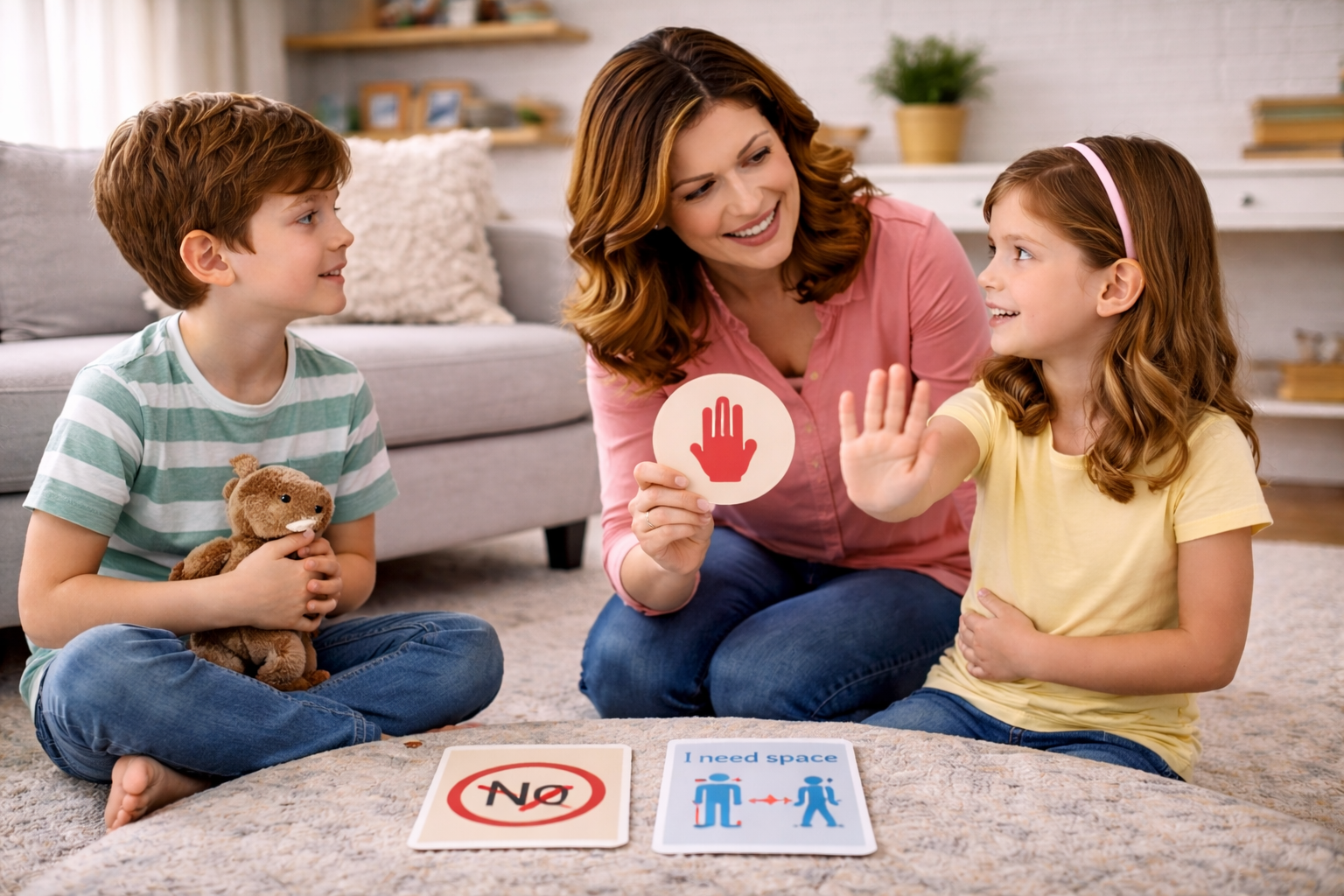
Healthy boundaries are essential for children’s emotional well-being, relationships, and self-respect. Children who understand boundaries are better able to protect themselves, respect others, communicate needs, and navigate social situations with confidence.
Boundaries are not about being rigid, rude, or distant. They are about understanding personal limits — physical, emotional, and social — and learning how to express them respectfully. This article explores practical, non-medical ways to help children develop healthy boundaries in everyday life.
What Healthy Boundaries Mean for Children
For children, healthy boundaries mean learning to:
- Recognize personal space
- Understand consent and choice
- Express discomfort respectfully
- Respect others’ limits
- Say “yes” or “no” appropriately
Boundaries help children feel safe and empowered, not isolated.
Why Boundary Skills Matter Early
Children who learn boundaries early are more likely to:
- Advocate for themselves
- Build respectful friendships
- Avoid unhealthy peer pressure
- Feel confident in social situations
- Respect differences
Boundary skills support both emotional safety and social competence.
Boundaries Start with Feeling Safe at Home
Children learn boundaries best in environments where their feelings and needs are respected.
Support this by:
- Listening seriously when children say no
- Respecting personal space when possible
- Taking emotions seriously
When children feel respected, they learn to respect others.
Teach Children to Notice Their Comfort Levels
Boundary awareness begins internally.
Help children notice:
- When something feels uncomfortable
- When they feel overwhelmed
- When they need space or support
You can say:
- “How does that feel in your body?”
- “Do you feel okay with that?”
Self-awareness is the first step.
Model Healthy Boundaries Yourself
Children learn boundaries by observing adults.
Model:
- Saying no respectfully
- Asking before touching or borrowing
- Taking breaks when needed
- Respecting others’ space
Your behavior teaches more than explanations.
Teach Children Simple Boundary Language
Children need words to express limits.
Teach phrases like:
- “I don’t like that.”
- “Please stop.”
- “I need space.”
- “I’m not comfortable.”
Practice these phrases during calm moments.
Respect a Child’s “No” Whenever Possible
When adults respect a child’s “no,” children learn that boundaries matter.
When “no” isn’t possible, explain why calmly:
- “I hear you don’t want to, and this is for safety.”
This balances respect with guidance.
Teach Consent in Everyday Situations
Consent is not just a big concept — it’s practiced daily.
Model consent by:
- Asking before hugs or play
- Allowing choice when appropriate
- Accepting refusal calmly
Consent builds trust and confidence.
Help Children Respect Others’ Boundaries
Boundary education includes respecting others.
Teach children to:
- Notice verbal and nonverbal cues
- Stop when someone says no
- Ask before continuing
Respect builds mutual trust.
Use Role-Play to Practice Boundaries
Role-play helps children rehearse responses.
Practice scenarios like:
- Someone taking a toy
- A friend wanting space
- Saying no to unwanted play
Practice builds confidence.
Avoid Forcing Physical Affection
Children should not be required to hug or touch others.
Offer alternatives:
- Waving
- High-fives
- Verbal greetings
Choice reinforces bodily autonomy.
Validate Discomfort Without Overreacting
When children express discomfort:
- Take it seriously
- Stay calm
- Offer support
Avoid dismissing feelings or escalating fear.
Teach That Boundaries Can Change
Children need to know that boundaries are flexible.
Explain:
- It’s okay to change your mind
- Different situations require different limits
Flexibility is part of healthy boundaries.
Avoid Shaming Boundary Setting
Avoid phrases like:
- “Don’t be rude.”
- “That’s silly.”
Shaming teaches children to ignore discomfort.
Support Assertiveness, Not Aggression
Help children express boundaries firmly but respectfully.
Guide language and tone:
- Calm voice
- Clear words
Assertiveness protects without harming relationships.
Encourage Open Communication
Create space for children to talk about:
- Social situations
- Peer interactions
- Discomfort or confusion
Open dialogue supports learning.
Adjust Guidance by Age
Younger children need:
- Simple language
- Frequent reminders
Older children need:
- Practice in real situations
- Respect for independence
Adapt support as children grow.
Boundaries Strengthen Relationships
Healthy boundaries don’t push people away.
They create:
- Trust
- Respect
- Emotional safety
Strong relationships depend on clear limits.
Teaching Boundaries Is a Long-Term Process
Boundary skills develop over time.
Children will:
- Forget
- Feel unsure
- Need reminders
Patience and consistency matter.
Raising Children Who Respect Themselves and Others
Children don’t learn boundaries from rules alone.
They learn them from:
- Daily interactions
- Adult modeling
- Emotional safety
By teaching healthy boundaries with empathy and clarity, you help children grow into confident individuals who respect themselves and others.
And that foundation supports healthy relationships for life.