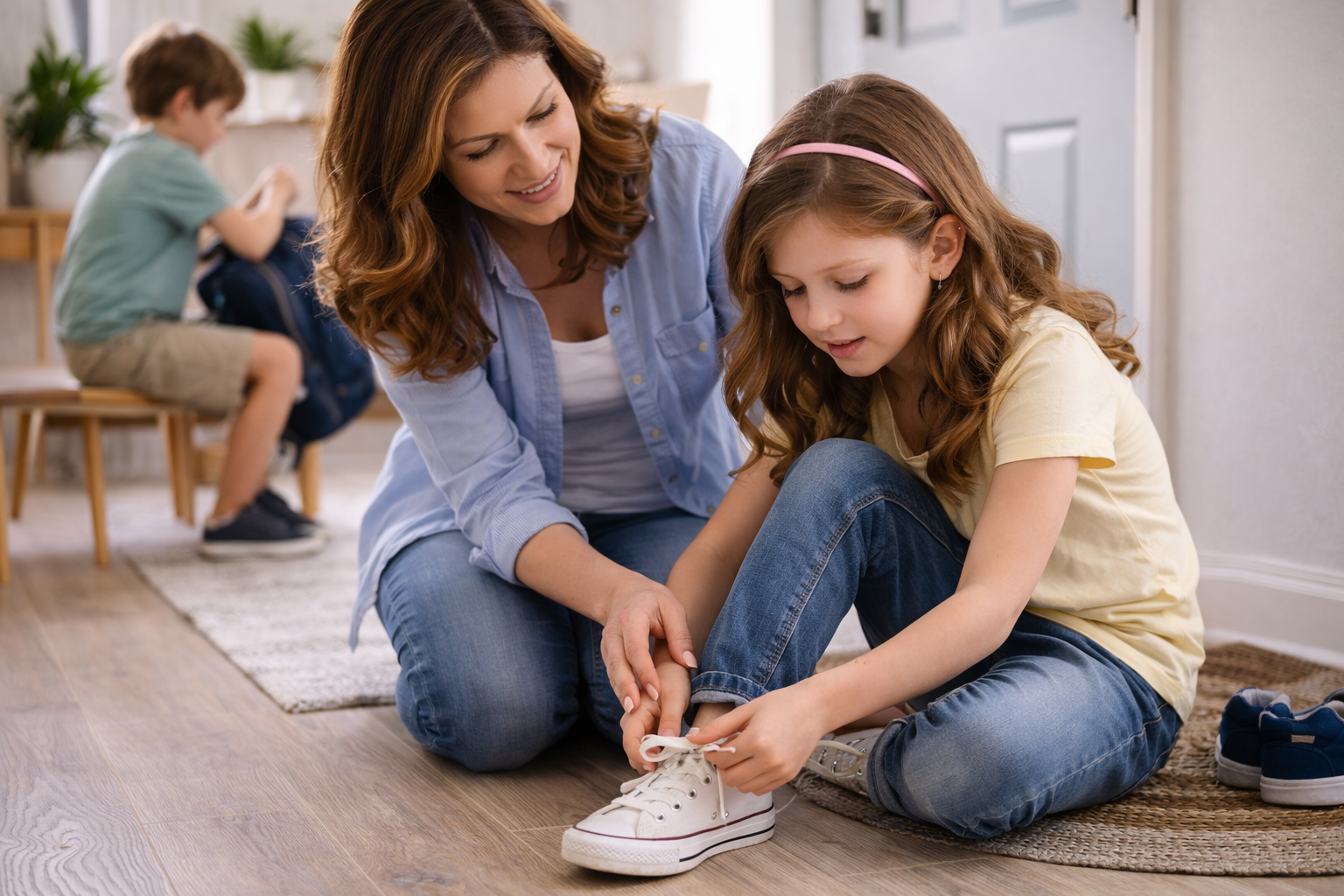
Independence is an essential skill for children, but it can be confusing for parents and caregivers to know how much support to give — and when to step back. Too much control can make children feel incapable, while too much distance can make them feel insecure or abandoned.
Healthy independence grows when children feel supported, trusted, and emotionally connected. It is not about pushing children to “do everything alone,” but about guiding them step by step toward confidence and self-reliance. This article explores practical, non-medical ways to help children develop independence without sacrificing emotional safety.
What Independence Really Means for Children
Independence does not mean isolation or emotional distance.
For children, independence means learning to:
- Try things on their own
- Make simple choices
- Solve small problems
- Ask for help when needed
- Trust their own abilities
True independence includes knowing when support is available.
Independence Grows from Connection, Not Distance
Children are more likely to explore and try new things when they feel securely connected.
When children feel emotionally safe, they are more willing to:
- Take risks
- Practice skills
- Face challenges
Connection is the foundation that allows independence to grow.
Start with Small, Manageable Steps
Independence builds gradually.
Start with:
- Simple tasks
- Clear expectations
- Repeated practice
Examples:
- Putting shoes away
- Choosing clothes
- Pouring water with help
Small successes build confidence.
Offer Support Without Taking Over
One of the biggest challenges is knowing when to help.
Try:
- Staying nearby
- Offering guidance verbally
- Allowing effort before stepping in
Ask:
- “Do you want help or do you want to try first?”
This respects autonomy while providing safety.
Let Children Make Age-Appropriate Choices
Choice is a powerful independence tool.
Offer limited choices:
- “Do you want this or that?”
- “Do you want to do it now or later?”
Choices build decision-making skills and self-trust.
Normalize Mistakes as Part of Learning
Children often fear independence because they fear failure.
Normalize mistakes by:
- Staying calm
- Encouraging problem-solving
- Avoiding criticism
Mistakes are how skills develop.
Avoid Rushing or Correcting Too Quickly
Speeding children along can undermine confidence.
Instead of:
- “Hurry up, I’ll do it.”
Try:
- “Take your time.”
- “You’re learning.”
Patience supports growth.
Teach Children to Ask for Help
Independence includes knowing when to seek support.
Teach that:
- Asking for help is allowed
- Support is always available
- Independence and connection coexist
Children who feel safe asking for help feel less abandoned.
Use Routines to Support Independence
Routines provide structure that supports autonomy.
When children know what to expect, they can:
- Take responsibility
- Complete tasks independently
- Feel capable
Predictability builds confidence.
Encourage Problem-Solving Before Stepping In
When children encounter challenges:
- Pause
- Ask questions
- Encourage thinking
For example:
- “What could you try?”
- “What do you think would help?”
Guided problem-solving builds independence.
Avoid Doing for Children What They Can Do Themselves
Helping too much sends the message:
- “You can’t do this.”
Instead:
- Allow time
- Accept imperfection
- Celebrate effort
Capability grows through practice.
Balance Independence with Emotional Support
Children need reassurance as they grow independent.
Offer:
- Encouragement
- Presence
- Emotional check-ins
Independence feels safer when support is visible.
Adjust Expectations by Age and Personality
Children develop independence at different rates.
Some need:
- More reassurance
- Slower transitions
Others need:
- More space
- Fewer reminders
Flexibility supports success.
Model Independence Yourself
Children learn by watching adults.
Model:
- Trying new things
- Handling mistakes calmly
- Asking for help
Your behavior sets the standard.
Avoid Using Independence as Pressure
Avoid phrases like:
- “You’re a big kid now.”
- “Do it yourself.”
Pressure creates anxiety.
Instead:
- Encourage gently
- Offer support
- Respect readiness
Celebrate Effort, Not Just Success
Notice:
- Attempts
- Persistence
- Progress
Say:
- “You tried.”
- “You kept going.”
This builds internal motivation.
Independence Builds Confidence Over Time
Children who practice independence develop:
- Self-trust
- Problem-solving skills
- Emotional resilience
These skills support lifelong growth.
Independence Is a Process, Not a Deadline
There is no age when children suddenly become independent.
Growth happens through:
- Daily practice
- Supportive guidance
- Patience
Each step matters.
Raising Independent Children Who Feel Supported
Children don’t need to be pushed away to grow.
They need adults who:
- Trust them
- Stay connected
- Offer guidance
By supporting independence with connection, you help children grow into confident, capable individuals who know they are never alone.
And that balance makes all the difference.