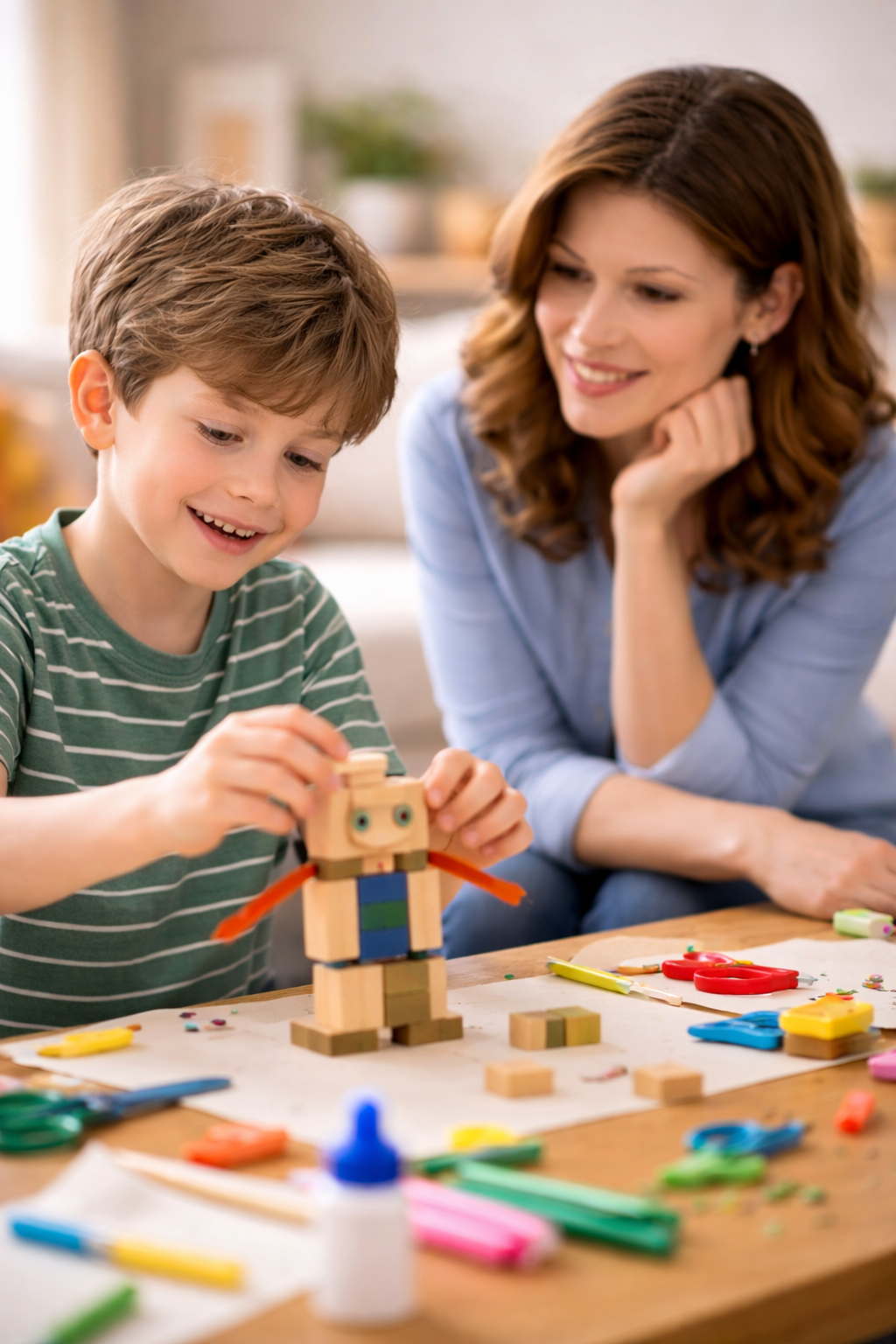
Confidence is one of the most valuable traits a child can develop. Confident children are more likely to try new things, handle challenges, express themselves, and recover from setbacks. Yet confidence does not grow from constant praise, pressure to perform, or unrealistic expectations.
True confidence grows when children feel safe, capable, and accepted for who they are — not only for what they achieve. This article explores practical, non-medical ways to help children develop genuine confidence in everyday life, without pressure or perfectionism.
What Real Confidence Looks Like in Children
Confidence is not loudness, dominance, or constant success.
Healthy confidence shows up as:
- Willingness to try
- Ability to make mistakes without shutting down
- Comfort expressing thoughts and feelings
- Trust in one’s ability to learn
- Openness to feedback
Confident children don’t believe they are perfect — they believe they can handle challenges.
Confidence Grows from Safety, Not Pressure
Children cannot build confidence in environments driven by fear, comparison, or constant evaluation.
Confidence grows when children feel:
- Emotionally safe
- Accepted even when they struggle
- Supported rather than judged
- Guided instead of controlled
Pressure may create short-term results, but it weakens long-term confidence.
Focus on Effort Instead of Outcomes
When children are praised only for results, they may avoid challenges.
Shift focus to:
- Effort
- Persistence
- Problem-solving
- Learning process
Examples:
- “You worked hard on that.”
- “You didn’t give up.”
- “You tried a new way.”
This teaches children that growth matters more than perfection.
Allow Children to Struggle Productively
Confidence grows through overcoming difficulty.
Instead of immediately rescuing:
- Pause
- Encourage
- Offer support without taking over
Struggle, when supported, teaches children: “I can handle this.”
Avoid Over-Praising or Inflated Praise
Praise that feels exaggerated can create pressure.
Avoid:
- “You’re the best!”
- “You’re perfect!”
Instead, use specific, realistic feedback:
- “You focused for a long time.”
- “You practiced and improved.”
Specific praise feels believable and builds internal confidence.
Encourage Independence in Small Ways
Confidence grows when children feel capable.
Support independence by:
- Letting children try tasks alone
- Allowing age-appropriate responsibility
- Accepting imperfect results
Doing things independently builds self-trust.
Normalize Mistakes and Learning
Children who fear mistakes often struggle with confidence.
Normalize mistakes by:
- Talking openly about learning
- Sharing your own mistakes
- Modeling problem-solving
Mistakes become part of growth, not proof of failure.
Avoid Comparing Children
Comparison undermines confidence.
Avoid:
- Comparing siblings
- Comparing peers
- Comparing past performance
Every child develops at their own pace.
Let Children Make Choices
Choice builds confidence.
Offer limited choices such as:
- “Do you want to start with this or that?”
- “Would you like to do it now or in five minutes?”
Choice increases ownership and self-trust.
Support Emotional Expression
Confident children feel safe expressing emotions.
Encourage:
- Naming feelings
- Talking openly
- Asking for help
Emotional expression strengthens inner security.
Model Confidence Through Your Own Behavior
Children learn confidence by watching adults.
Model:
- Trying new things
- Handling mistakes calmly
- Speaking kindly to yourself
Your self-talk becomes their inner voice.
Encourage Strengths Without Labeling
Instead of labels like “smart” or “talented,” focus on behaviors.
For example:
- “You enjoy solving problems.”
- “You like helping others.”
This keeps identity flexible and resilient.
Allow Failure Without Shame
Failure handled with empathy builds resilience and confidence.
Respond to failure by:
- Validating feelings
- Encouraging reflection
- Supporting a new attempt
Shame blocks confidence. Support builds it.
Build Confidence Through Routine and Predictability
Predictable routines help children feel capable.
Routine:
- Reduces anxiety
- Builds competence
- Creates a sense of mastery
Confidence grows in stable environments.
Encourage Curiosity, Not Performance
Children feel more confident when learning is about curiosity.
Ask:
- “What do you want to try?”
- “What do you wonder about?”
Curiosity leads to intrinsic motivation.
Celebrate Growth Over Time
Confidence builds gradually.
Notice progress such as:
- Increased effort
- Greater independence
- Improved coping
Growth matters more than speed.
Be Patient with Confidence Development
Confidence is not instant.
Children may:
- Doubt themselves
- Need reassurance
- Try and retreat
Stay supportive and consistent.
Confidence Is Built Through Relationship
Strong relationships are the foundation of confidence.
When children feel accepted and supported, they are more willing to take risks and believe in themselves.
Raising Confident Children Without Pressure
Confidence does not come from pushing children to be more.
It comes from:
- Trust
- Support
- Acceptance
- Opportunity to grow
By guiding children with empathy and patience, you help them build confidence that is steady, flexible, and lasting.
And that confidence stays with them for life.