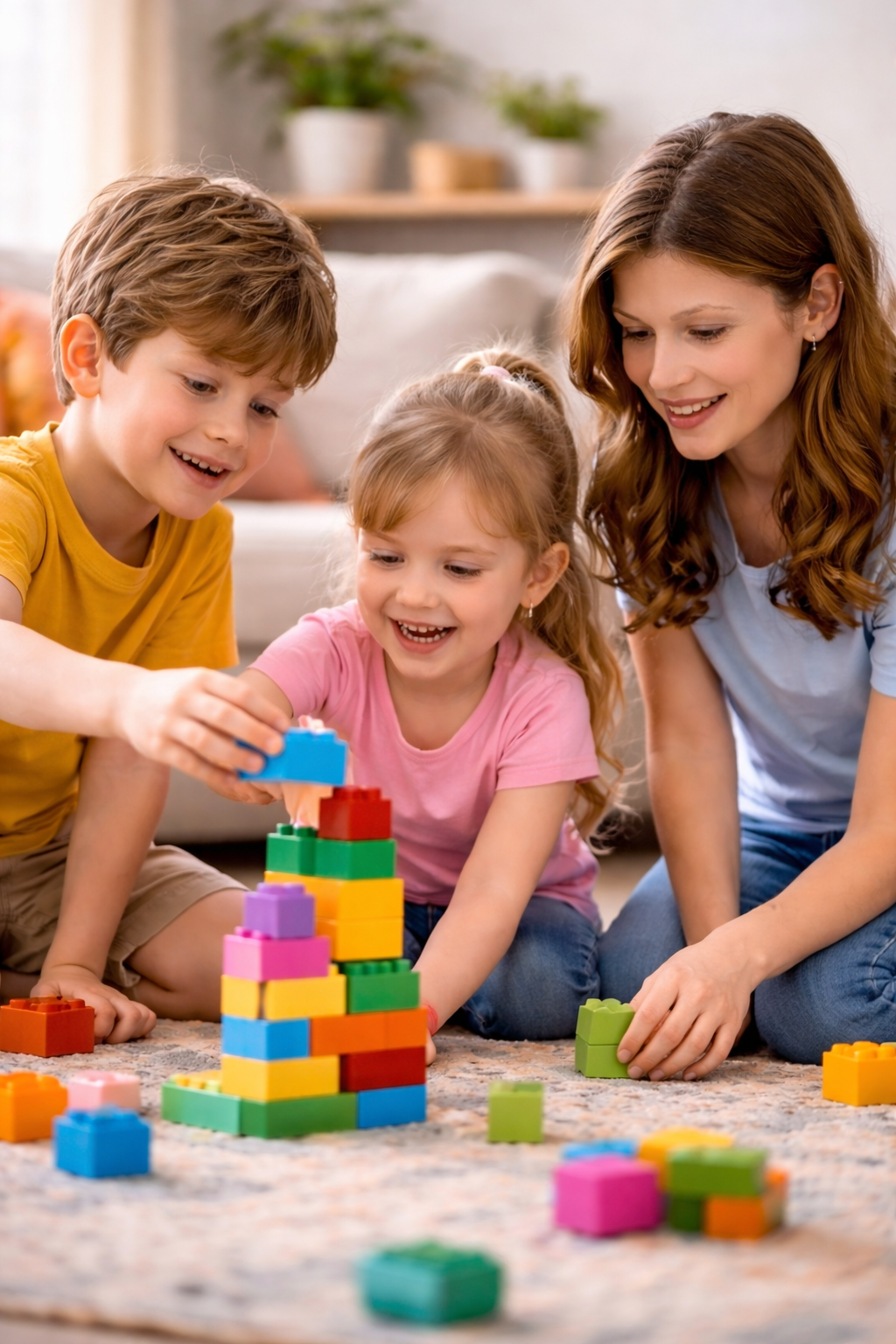
Sibling rivalry is a normal part of family life. Even in loving homes, siblings argue, compete, provoke each other, and fight for attention. These conflicts can be exhausting for parents and caregivers, especially when they happen repeatedly throughout the day.
However, sibling rivalry is not a sign of failure in parenting — it is a sign that children are learning how relationships work. With the right guidance, everyday conflicts can become powerful opportunities to teach cooperation, empathy, boundaries, and emotional regulation.
This article presents practical, non-medical strategies to reduce sibling rivalry and help children build cooperative, respectful relationships at home.
Understanding Why Sibling Rivalry Happens
Sibling conflict does not come from “bad behavior.” It usually comes from unmet needs, developmental differences, and emotional overload.
Common causes include:
- Competition for parental attention
- Differences in age, abilities, and maturity
- Personality clashes
- Limited resources (toys, space, time)
- Fatigue, hunger, or overstimulation
Children often express big emotions with the people they feel safest with — their siblings. Seeing rivalry as communication rather than defiance changes how adults respond.
The Real Goal: Skills, Not Silence
The goal is not to eliminate all sibling conflict. That would be unrealistic and unhealthy.
A healthier goal is to:
- Reduce physical and verbal aggression
- Lower the intensity of conflicts
- Teach children how to repair after disagreements
- Help siblings cooperate more often over time
Conflict handled well teaches lifelong social skills.
Step One: Always Stop Unsafe Behavior
When conflict escalates, safety comes first.
Your role is to intervene calmly and firmly when you see:
- Hitting or pushing
- Throwing objects
- Insults or name-calling
- Invasion of personal space
Use short, clear phrases:
- “I won’t let you hit.”
- “Bodies apart.”
- “This is not safe.”
Avoid yelling or long lectures. Calm authority de-escalates the situation faster.
Avoid Becoming the Judge
Many sibling arguments revolve around “who started it.”
When adults play judge:
- Children focus on winning rather than solving
- Rivalry increases
- Dependence on adult intervention grows
Instead, shift the focus from blame to resolution.
Say things like:
- “I’m not deciding who started. I’m deciding what happens now.”
- “Both of you need space.”
- “Let’s reset.”
This keeps leadership without feeding competition.
Establish Simple Family Rules
Clear, consistent rules reduce chaos.
Three core rules cover most sibling conflicts:
- Safe bodies
- Respectful words
- Respect for belongings
Repeat these rules often and enforce them consistently.
For example:
- “Safe bodies. Step back.”
- “Respectful words. Try again.”
- “Ask before taking.”
Predictability creates emotional safety.
Reduce Rivalry by Reducing Scarcity
Many fights happen because children feel there is not “enough.”
Ways to reduce scarcity:
- Schedule predictable one-on-one time with each child
- Use timers to create clear turns
- Duplicate highly contested items when possible
- Create personal spaces for older children
When children feel secure, they compete less.
The Power of Individual Attention
Short, consistent one-on-one time significantly reduces rivalry.
This does not need to be long:
- 10–15 minutes a few times per week
- Bedtime check-ins
- A short walk or quiet activity
During this time:
- Let the child lead
- Avoid correcting
- Be fully present
Children who feel seen are less likely to fight for attention.
Never Compare Siblings
Comparison is one of the fastest ways to intensify rivalry.
Avoid:
- “Why can’t you be like your brother?”
- “Your sister never does this.”
- Labels like “the easy one” or “the difficult one”
Instead, focus on behavior and skills:
- “We use kind words.”
- “This needs to stop.”
- “Let’s fix this.”
Language shapes sibling dynamics.
Coach Conflicts in the Moment
When emotions are high, keep guidance short.
A simple coaching sequence:
- Pause the conflict
- Name the problem
- Restate the rule
- Offer limited choices
- Follow through
Example:
“You both want the same toy. We don’t grab. You can take turns with the timer or choose different toys.”
This teaches problem-solving without overwhelming children.
Teach Repair Instead of Forced Apologies
Forced apologies often feel fake and increase resentment.
Teach repair through action:
- Returning a toy
- Offering help
- Saying one respectful sentence
- Doing something kind to reset
Ask guiding questions:
- “What could help fix this?”
- “What would make it better?”
Repair builds accountability and empathy.
Distinguish Tattling from Reporting
Constant tattling exhausts parents.
Teach children to ask:
- “Is someone hurt or unsafe?”
- “Do I need help, or am I trying to get them in trouble?”
If it’s minor, redirect:
- “Use your words.”
- “Ask for space.”
- “Solve it together.”
This builds independence and reduces parent refereeing.
Teach Assertiveness to Both Sides
Some children dominate. Others withdraw.
Teach assertive phrases during calm moments:
- “Stop. I don’t like that.”
- “That’s mine. Ask first.”
- “I need space.”
Practicing these scripts builds confidence and reduces power imbalance.
Create Opportunities for Cooperation
Cooperation rarely happens by accident.
Design cooperative moments:
- Team cleanup with music
- Cooking together with assigned roles
- Building projects
- Shared goals
Keep them short and positive.
Afterward, name the cooperation:
- “You worked as a team.”
- “That was respectful.”
Positive reinforcement strengthens cooperative identity.
Manage Overstimulation Proactively
Many sibling fights happen when children are overwhelmed.
Reduce overstimulation by:
- Limiting screen use late in the day
- Keeping predictable routines
- Providing quiet decompression time
- Ensuring enough sleep
A calmer environment leads to fewer conflicts.
When One Child Is Often the Aggressor
Aggression often signals unmet needs or poor impulse control.
Respond with:
- Clear limits
- Immediate intervention
- Teaching alternatives
- Increased connection
Avoid shaming. Focus on skill-building.
When One Child Is Often the Target
Support more sensitive children by:
- Teaching boundary language
- Practicing assertiveness
- Encouraging movement away from conflict
Confidence reduces victimization.
Repair Your Own Mistakes as a Parent
Sibling conflict is draining. Parents lose patience sometimes.
Repair by saying:
- “I got overwhelmed. I’m sorry.”
- “Let’s reset.”
Modeling repair teaches emotional maturity.
Building a Long-Term Cooperative Relationship
Sibling cooperation grows slowly through:
- Consistent boundaries
- Emotional support
- Skill-building
- Repair after conflict
Rivalry does not define the relationship — guidance does.
Sibling Conflict Is a Training Ground
Handled with calm leadership, sibling rivalry teaches:
- Empathy
- Negotiation
- Emotional regulation
- Respect
These skills last far beyond childhood.
You are not raising children to never fight —
You are raising them to know how to recover, respect, and reconnect.
And that makes all the difference.