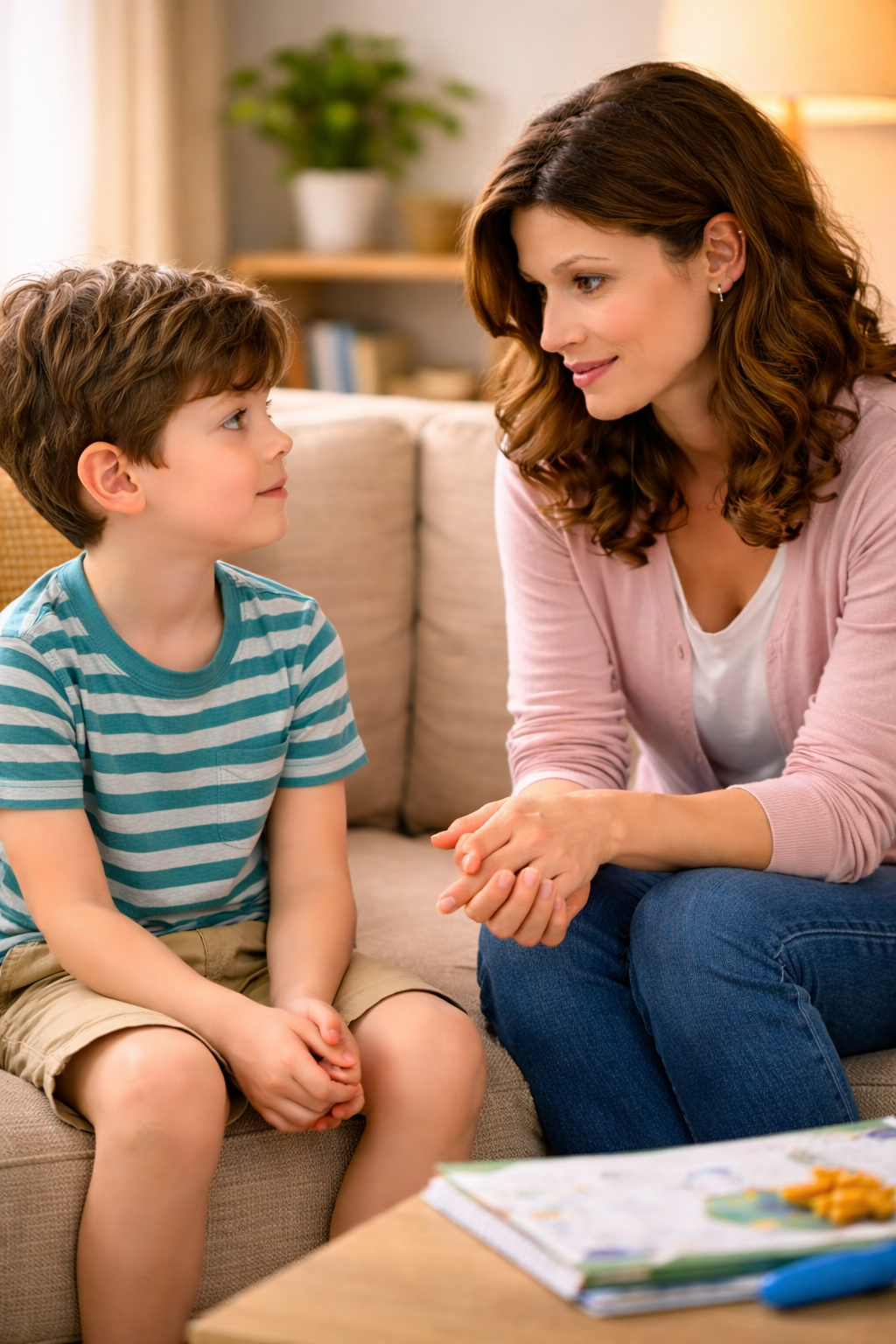
Emotional development is one of the most important foundations for a child’s well-being. Children who learn to understand, express, and regulate their emotions grow into adults who handle relationships, challenges, and stress with more balance and confidence.
The good news is that emotional development doesn’t require special tools, long talks, or perfect reactions. It happens in everyday life — through small moments, daily interactions, and the way adults respond to children’s feelings.
This article explores practical, non-medical ways to support your child’s emotional development naturally, calmly, and consistently.
What Emotional Development Means for Children
Emotional development includes a child’s ability to:
- Recognize their emotions
- Express feelings appropriately
- Regulate emotional reactions
- Understand others’ feelings
- Recover from emotional challenges
These skills develop gradually and require guidance, patience, and repetition.
Emotional Skills Are Learned, Not Automatic
Children are not born knowing how to handle emotions. Big feelings can feel overwhelming because their brains are still developing the ability to self-regulate.
When children struggle emotionally, it doesn’t mean they are misbehaving — it means they are learning.
Your role is to guide, not to eliminate emotions.
Create an Emotionally Safe Environment
Children learn best when they feel emotionally safe.
An emotionally safe environment includes:
- Predictable routines
- Calm adult responses
- Respectful communication
- Acceptance of feelings
When children feel safe, they are more open to learning emotional skills.
Name Emotions Regularly
One of the simplest and most powerful tools is naming emotions.
Use everyday moments to say:
- “You look frustrated.”
- “That made you sad.”
- “You seem excited.”
Naming emotions helps children:
- Understand what they feel
- Build emotional vocabulary
- Feel understood
Words give structure to feelings.
Validate Feelings Without Judging
Validation tells a child: “Your feelings make sense.”
Examples:
- “I see why that upset you.”
- “That was disappointing.”
- “It’s okay to feel angry.”
Validation does not mean approving behavior. It means acknowledging emotions before guiding behavior.
Separate Feelings from Behavior
Children need to learn that:
- All feelings are allowed
- Not all behaviors are acceptable
You can say:
- “It’s okay to be angry, but it’s not okay to hit.”
- “You can feel sad and still follow the rule.”
This distinction supports emotional growth without permissiveness.
Model Healthy Emotional Expression
Children learn emotional regulation by watching adults.
Model:
- Naming your own emotions calmly
- Taking breaks when overwhelmed
- Apologizing when you overreact
Your behavior becomes their emotional blueprint.
Respond Calmly to Big Emotions
Big emotions are opportunities for learning — not emergencies.
When a child is overwhelmed:
- Stay close
- Speak calmly
- Avoid lecturing
Your calm presence helps regulate their nervous system.
Teach Simple Emotional Regulation Tools
Introduce age-appropriate strategies:
- Deep breathing
- Counting slowly
- Quiet space
- Holding a comfort object
Practice these tools during calm moments so they are available during stress.
Use Daily Routines to Support Emotions
Routines help children feel grounded.
Predictable routines:
- Reduce anxiety
- Support emotional regulation
- Help children know what to expect
Emotional stability grows in predictable environments.
Encourage Expression Through Play
Play is a natural way for children to process emotions.
Through play, children:
- Express feelings safely
- Re-enact experiences
- Practice problem-solving
Join their play when possible and observe emotional themes.
Talk About Emotions After the Moment Passes
When emotions settle, reflect gently:
- “What were you feeling?”
- “What helped you calm down?”
- “What could help next time?”
Reflection builds emotional awareness.
Avoid Minimizing or Rushing Emotions
Phrases like “You’re fine” or “Stop crying” can shut emotional learning down.
Instead:
- Allow emotions to pass
- Offer comfort
- Guide calmly
Emotions move through faster when they’re acknowledged.
Support Emotional Development Through Connection
Connection is the foundation of emotional growth.
Strengthen connection by:
- Spending one-on-one time
- Listening without fixing
- Showing interest in your child’s inner world
Connected children regulate emotions more easily.
Help Children Understand Others’ Emotions
Emotional development includes empathy.
Support this by:
- Talking about others’ feelings
- Asking perspective questions
- Reading stories together
Understanding others builds social-emotional skills.
Be Patient with Emotional Learning
Emotional skills take time.
Expect:
- Repetition
- Setbacks
- Gradual progress
Consistency matters more than speed.
Adjust Support as Children Grow
Emotional needs change with age.
Younger children need:
- More co-regulation
- Simpler language
Older children need:
- Space to talk
- Respect for independence
Adapt support accordingly.
Emotional Development Is a Daily Process
There is no single moment that teaches emotional intelligence.
It grows through:
- Thousands of small interactions
- Calm responses
- Daily modeling
Every moment counts.
Raising Emotionally Healthy Children
Emotionally healthy children are not children who never struggle — they are children who learn how to move through emotions with support.
By guiding your child with empathy, consistency, and calm presence, you help them build emotional skills that last a lifetime.
And those skills shape how they relate to themselves and the world.