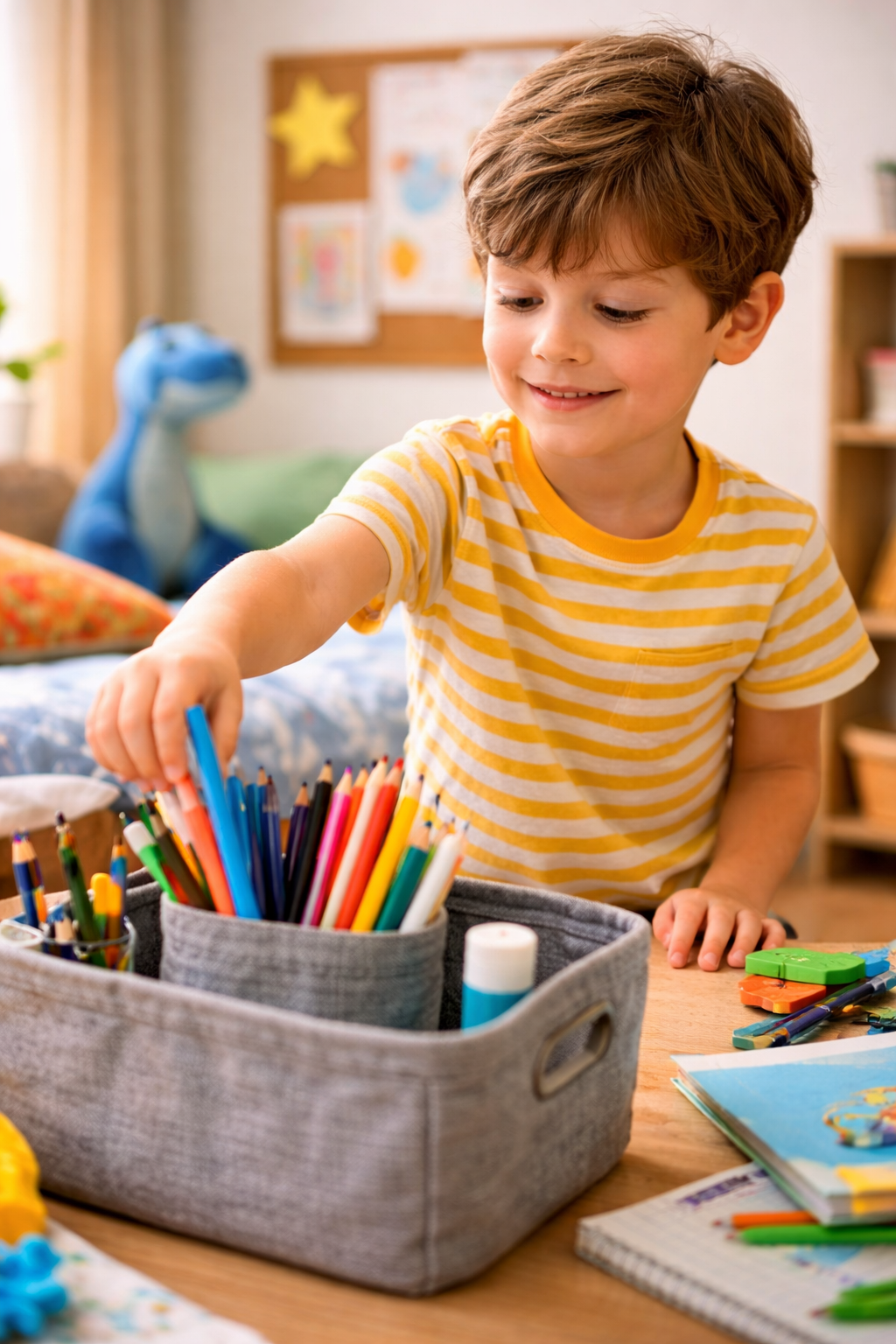
Responsibility is not something children suddenly develop as they grow older. It is a skill built gradually, through repetition, trust, and everyday experiences. When children are encouraged to take responsibility in simple, age-appropriate ways, they develop confidence, independence, and a strong sense of capability.
The good news is that teaching responsibility doesn’t require strict rules or heavy pressure. It grows naturally when daily habits are structured with intention and consistency. This article shows practical ways to encourage responsibility in children through everyday life.
What Responsibility Really Means for Children
For children, responsibility is not about perfection or adult-level behavior. It’s about learning to:
- Take care of their belongings
- Follow through on simple tasks
- Understand consequences
- Make choices and learn from them
- Contribute to family life
Responsibility develops step by step, not all at once.
Responsibility Starts with Trust
Children become responsible when they feel trusted.
When adults constantly take over, remind, or fix everything, children receive the message:
- “You can’t handle this.”
Instead, responsibility grows when children hear:
- “I believe you can try.”
Trust is the foundation of responsibility.
Build Responsibility Into Daily Routines
Routines reduce decision fatigue and make responsibility predictable.
Examples:
- Putting shoes away after coming home
- Placing dishes in the sink after meals
- Packing a backpack the night before school
- Tidying toys before bedtime
When tasks are part of the routine, they feel normal rather than optional.
Start Small and Be Consistent
Big responsibilities can overwhelm children.
Start with:
- One or two simple tasks
- Clear expectations
- Daily repetition
Consistency matters more than complexity.
Match Responsibilities to Age and Ability
Children are more successful when expectations match their developmental stage.
Toddlers:
- Putting toys in a bin
- Throwing trash away
Preschoolers:
- Helping set the table
- Putting clothes in the hamper
School-Aged Children:
- Making their bed
- Preparing simple snacks
- Managing homework routines
Adjust as your child grows.
Let Children Experience Natural Consequences
Natural consequences teach responsibility without punishment.
Examples:
- Forgetting a toy means it stays at home
- Not putting shoes away means they’re harder to find
- Rushing homework leads to corrections later
Approach these moments with empathy, not “I told you so.”
Avoid Over-Reminding and Nagging
Constant reminders teach dependence.
Instead:
- Give one clear reminder
- Allow space for the child to remember
- Accept small mistakes as part of learning
Responsibility grows through practice, not pressure.
Involve Children in Family Responsibilities
Children feel capable when they contribute.
Involve them in:
- Cooking
- Cleaning
- Planning
- Organizing
Contribution builds pride and belonging.
Use Encouragement, Not Rewards
External rewards can undermine internal motivation.
Focus on:
- Acknowledging effort
- Expressing appreciation
- Highlighting contribution
Examples:
- “Thanks for helping. That made things easier.”
- “You took care of that on your own.”
Model Responsibility Daily
Children learn responsibility by watching adults.
Model:
- Following through on commitments
- Admitting mistakes
- Managing tasks calmly
Your actions teach more than instructions.
Allow Imperfection
Responsibility includes learning through mistakes.
Expect:
- Messy results
- Forgetfulness
- Learning curves
Correct gently, without shame.
Teach Problem-Solving
When something goes wrong, guide reflection:
- “What could help next time?”
- “What’s one thing we could change?”
This builds ownership and critical thinking.
Give Children Real Responsibility
Avoid giving “fake” tasks that don’t matter.
Children know when their contribution is real.
Give responsibilities that:
- Actually help the family
- Have real outcomes
- Are respected
Feeling useful motivates responsibility.
Create Visual Supports When Helpful
Some children benefit from:
- Checklists
- Charts
- Visual reminders
These tools support independence without constant reminders.
Be Patient With the Process
Responsibility takes time.
Children may:
- Forget
- Resist
- Need reminders
Stay calm and consistent. Progress comes gradually.
Balance Support and Independence
Responsibility grows best when adults:
- Support without rescuing
- Guide without controlling
- Trust without abandoning
This balance builds confidence.
Responsibility Builds Self-Esteem
When children see themselves as capable, self-esteem grows naturally.
Responsibility teaches:
- “I can handle things.”
- “I matter.”
- “I contribute.”
These beliefs shape lifelong confidence.
Raising Responsible, Capable Children
Responsibility is not taught through lectures — it’s learned through lived experience.
By building responsibility into daily habits, routines, and family life, you help your child grow into a capable, confident individual who trusts themselves and their abilities.
And that lesson lasts far beyond childhood.