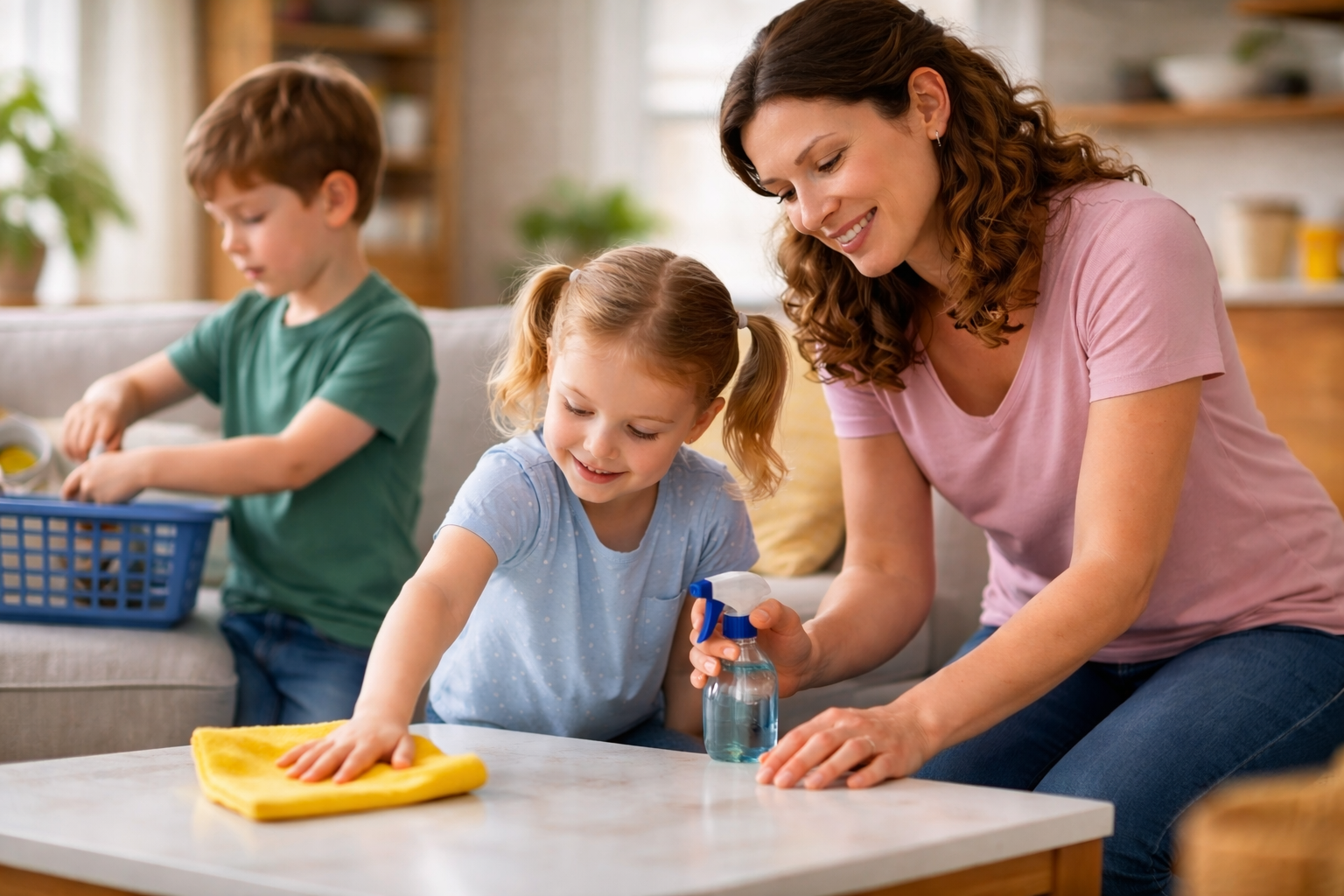
Household tasks are often seen as chores adults must handle alone, especially when children are involved. Many parents avoid including kids because it feels slower, messier, or more exhausting. However, involving children in household tasks can be one of the most effective ways to teach responsibility, cooperation, and independence — when done the right way.
This article will show how to involve children in daily household tasks without stress, pressure, or power struggles, turning everyday responsibilities into valuable learning moments.
Why Involving Children in Household Tasks Matters
When children participate in household tasks, they gain much more than practical skills.
They learn:
- Responsibility
- Cooperation
- Independence
- Confidence
- Respect for shared spaces
Helping at home gives children a sense of belonging and contribution. They feel capable and valued.
Start with the Right Mindset
The goal is not efficiency — it’s learning.
When involving children:
- Expect tasks to take longer
- Accept imperfect results
- Focus on effort, not outcome
Shifting your mindset reduces frustration and makes the experience more positive for everyone.
Choose Age-Appropriate Tasks
Children are more cooperative when tasks match their abilities.
Toddlers (Ages 2–3)
- Putting toys in bins
- Wiping surfaces with a cloth
- Carrying lightweight items
Preschoolers (Ages 4–5)
- Setting the table
- Feeding pets (with supervision)
- Sorting laundry
School-Aged Children (Ages 6–10)
- Making their bed
- Helping prepare simple meals
- Taking out small trash bags
Older Children
- Managing their own laundry
- Cleaning their room
- Helping with meal planning
Matching tasks to age prevents frustration and builds confidence.
Make Tasks Part of the Routine
Children respond better when tasks are predictable.
Examples:
- Toys cleaned up before dinner
- Bed made after waking up
- Shoes put away when entering the house
Routine turns tasks into habits rather than negotiations.
Offer Clear and Simple Instructions
Avoid overwhelming children with too many steps.
Instead:
- Give one instruction at a time
- Demonstrate when necessary
- Keep explanations short
Clarity reduces resistance and confusion.
Turn Tasks Into a Team Effort
Children are more motivated when tasks feel shared, not imposed.
Try:
- Cleaning together
- Using phrases like “Let’s do this together”
- Making it a family activity
Teamwork builds cooperation and reduces power struggles.
Allow Choice When Possible
Giving children limited choices increases cooperation.
Examples:
- “Do you want to tidy the books or the toys first?”
- “Would you like to help now or after your snack?”
Choice gives children a sense of control without removing responsibility.
Use Encouragement Instead of Rewards
External rewards can reduce internal motivation.
Focus on:
- Verbal encouragement
- Acknowledging effort
- Expressing appreciation
Examples:
- “Thank you for helping — that really made a difference.”
- “You worked hard on that.”
Feeling useful is often reward enough.
Keep Expectations Realistic
Children are learning. Messy results are part of the process.
Avoid:
- Re-doing tasks in front of them
- Criticizing how they did it
- Expecting adult-level performance
Correct gently later if needed, out of sight.
Use Music, Timers, or Games
Making tasks playful reduces resistance.
Ideas:
- Cleanup songs
- Timers for short tasks
- Friendly challenges
Playfulness lowers stress and increases engagement.
Avoid Turning Tasks into Punishment
Household tasks should not be used as consequences for misbehavior.
When tasks feel like punishment, children associate responsibility with negativity.
Instead:
- Keep tasks neutral
- Separate discipline from contribution
This preserves a healthy attitude toward helping.
Teach One Skill at a Time
Focus on one responsibility before adding another.
For example:
- Mastering toy cleanup before adding table-setting
- Learning laundry sorting before folding
Gradual learning builds confidence.
Model Willingness to Help
Children imitate adult behavior.
Model:
- Helping without complaining
- Speaking positively about shared responsibilities
- Taking care of your own tasks calmly
Your attitude shapes theirs.
Be Patient with Resistance
Resistance is normal, especially during transitions or tired moments.
Respond with:
- Calm reminders
- Empathy
- Consistency
Avoid power struggles. Calm persistence works better than force.
Celebrate Contribution, Not Perfection
Notice when children help — even in small ways.
Say things like:
- “I noticed you put your shoes away.”
- “Thanks for helping the family.”
Recognition builds pride and motivation.
Household Tasks Build Life Skills
Through daily responsibilities, children learn:
- Time management
- Cooperation
- Self-discipline
- Respect for shared spaces
These skills prepare them for adulthood more than any lecture.
Creating a Cooperative Home Environment
When children feel like contributors rather than helpers “under orders,” cooperation becomes natural.
Household tasks stop being stressful when:
- Expectations are clear
- Support is consistent
- Effort is valued
Small Steps Create Big Habits
You don’t need a chore chart for everything.
Start with:
- One task
- One routine
- One moment of shared responsibility
Over time, these moments shape confident, capable children.
Raising Capable and Cooperative Children
Involving children in household tasks is not about having a cleaner house — it’s about raising capable humans.
With patience, consistency, and realistic expectations, daily responsibilities become powerful lessons in independence and cooperation.
And those lessons last a lifetime.