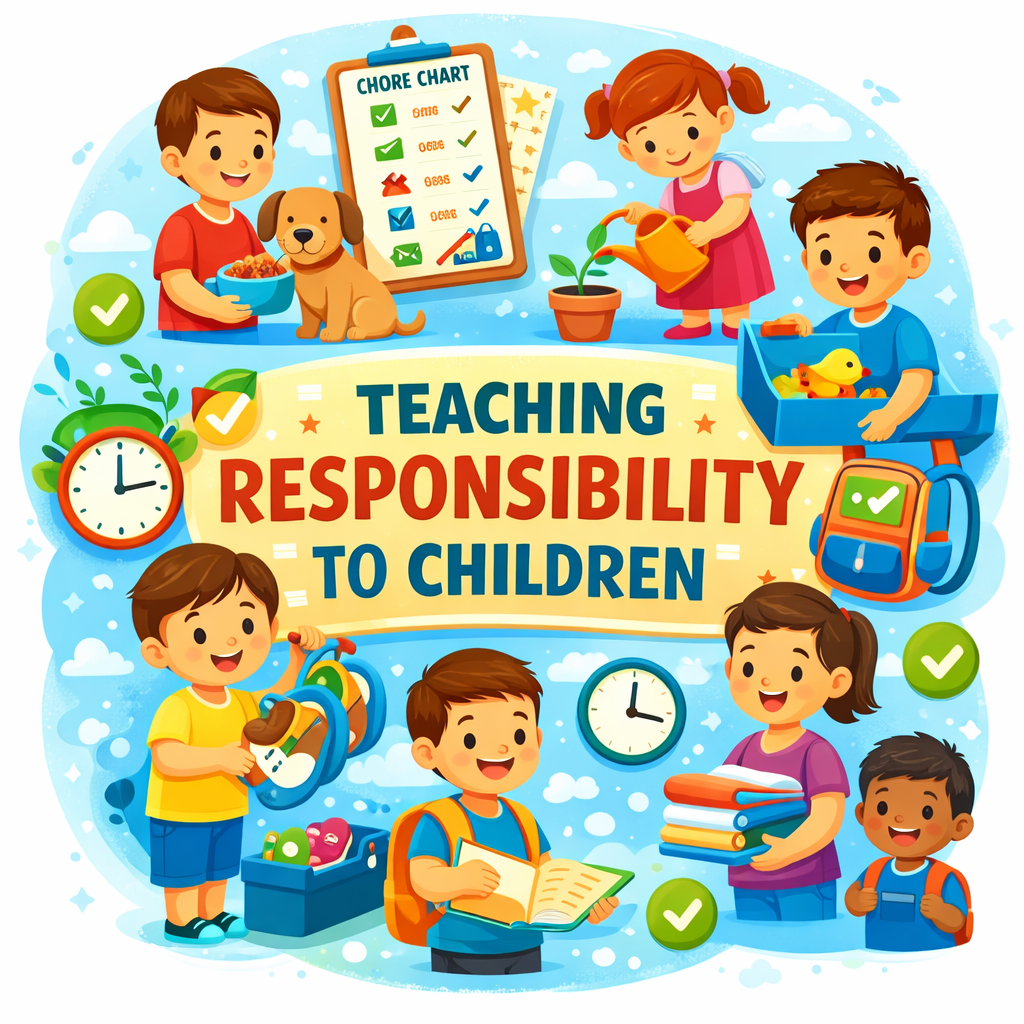
Raising responsible children doesn’t happen by chance — it’s a process built day by day through guidance, example, and consistent reinforcement. Teaching responsibility helps children become more independent, trustworthy, and ready for real-world challenges. But how do you do that in a way that makes sense for their age and stage?
This article presents practical, positive, and age-appropriate strategies to help parents and caregivers instill responsibility in children — not through pressure, but through everyday opportunities.
What Does Responsibility Look Like in Childhood?
Responsibility in children shows up in many forms:
- Taking care of their belongings
- Following through on tasks (like homework or chores)
- Admitting mistakes and learning from them
- Understanding how their actions affect others
- Being dependable and accountable
Children aren’t born with these traits, but they are very capable of learning them over time with proper guidance and encouragement.
Start Early with Small Tasks
Responsibility starts with the little things. Even toddlers can be involved in age-appropriate ways.
For Toddlers (Ages 2–3):
- Putting toys back in a bin
- Throwing trash in the bin
- Bringing their cup to the sink
For Preschoolers (Ages 4–5):
- Making their bed (even if it’s messy)
- Feeding a pet with supervision
- Setting the table for meals
The goal is not perfection, but participation. Children take pride in being helpful — especially when they are praised for trying.
Make Responsibilities Part of Daily Routines
Children thrive on routines. By attaching responsibilities to certain times of day, they become habits instead of battles.
Example:
- After breakfast: Clear plate
- Before bedtime: Pick out clothes for the next day
- After playtime: Clean up toys
When a child knows what is expected and when, they’re more likely to take initiative.
Offer Choices Within Limits
Letting children make small choices gives them a sense of ownership and control — key factors in developing responsibility.
Try offering:
- “Would you like to water the plants before or after your snack?”
- “Do you want to clean your room now or in 10 minutes?”
This turns the task into a decision they feel part of, rather than something imposed.
Use Visual Aids for Younger Children
Visual chore charts or responsibility boards are excellent tools for young children. These can include:
- Picture-based charts for non-readers
- Sticker rewards for completed tasks
- Daily checklists they can mark off
The visual reminder helps children stay on track and feel accomplished.
Model Responsibility in Your Own Actions
Children learn far more from what we do than what we say. Model the behavior you want them to develop:
- Keep your promises
- Admit when you make mistakes
- Respect your own duties (e.g., cleaning, work tasks)
If you want your child to be responsible, let them see you being responsible — even in small ways.
Avoid Doing Everything for Them
It can be faster (and sometimes less stressful) to do tasks for your child, but that robs them of learning opportunities.
Instead:
- Let them try first — then help if truly needed
- Accept that it won’t be perfect
- Celebrate the effort, not just the result
Children build competence through experience, not observation.
Use Natural Consequences
When appropriate, allow children to experience the natural outcome of their choices. This teaches responsibility without punishment.
Examples:
- If they forget their homework, they deal with the result at school
- If they leave toys outside, they might get dirty or lost
Always approach this with empathy, not “I told you so.” The goal is learning, not shame.
Turn Mistakes Into Teaching Moments
When children make mistakes — and they will — use those moments to guide them with kindness:
- Ask: “What do you think we could do differently next time?”
- Focus on problem-solving instead of blame
- Encourage reflection without making them feel bad
This builds resilience and accountability.
Celebrate Responsibility
Positive reinforcement is powerful. When your child follows through on a task or makes a responsible choice, acknowledge it:
- “I noticed you put your shoes away without being asked. That’s so responsible of you.”
- “You remembered your backpack today — nice job!”
Over time, they’ll associate responsibility with positive feelings and internal motivation.
Age-Appropriate Responsibility Ideas
Here’s a general guide for what responsibilities children can take on at different ages. Always consider your child’s maturity and personality.
Ages 2–4:
- Pick up toys
- Help feed pets
- Wipe spills
Ages 5–7:
- Make bed
- Put clothes in hamper
- Water plants
Ages 8–10:
- Pack their own backpack
- Help with laundry
- Wash dishes (with supervision)
Ages 11–13:
- Prepare simple meals
- Take care of younger siblings briefly
- Manage homework schedule
As they grow, increase the complexity and significance of their responsibilities.
Create a Responsibility-Friendly Environment
Your home environment can either support or hinder your child’s efforts:
- Make sure items are within reach (e.g., coat hooks, toy bins)
- Provide tools that encourage independence (like step stools)
- Keep expectations visible (charts, whiteboards)
Set them up for success by making it easy for them to act responsibly.
Patience and Consistency Matter Most
Developing responsibility is not a one-week process. It requires consistency, encouragement, and patience — especially on tough days.
Avoid:
- Expecting instant results
- Punishing mistakes harshly
- Comparing your child to others
Every small step is progress. Keep going, even when it feels slow.
Empowering Children for Life
Teaching responsibility is a lifelong gift. It empowers children to manage themselves, care for others, and make wise choices — skills they’ll use long after childhood ends.
Your consistent support, modeling, and encouragement help build the foundation for a confident, responsible future adult.