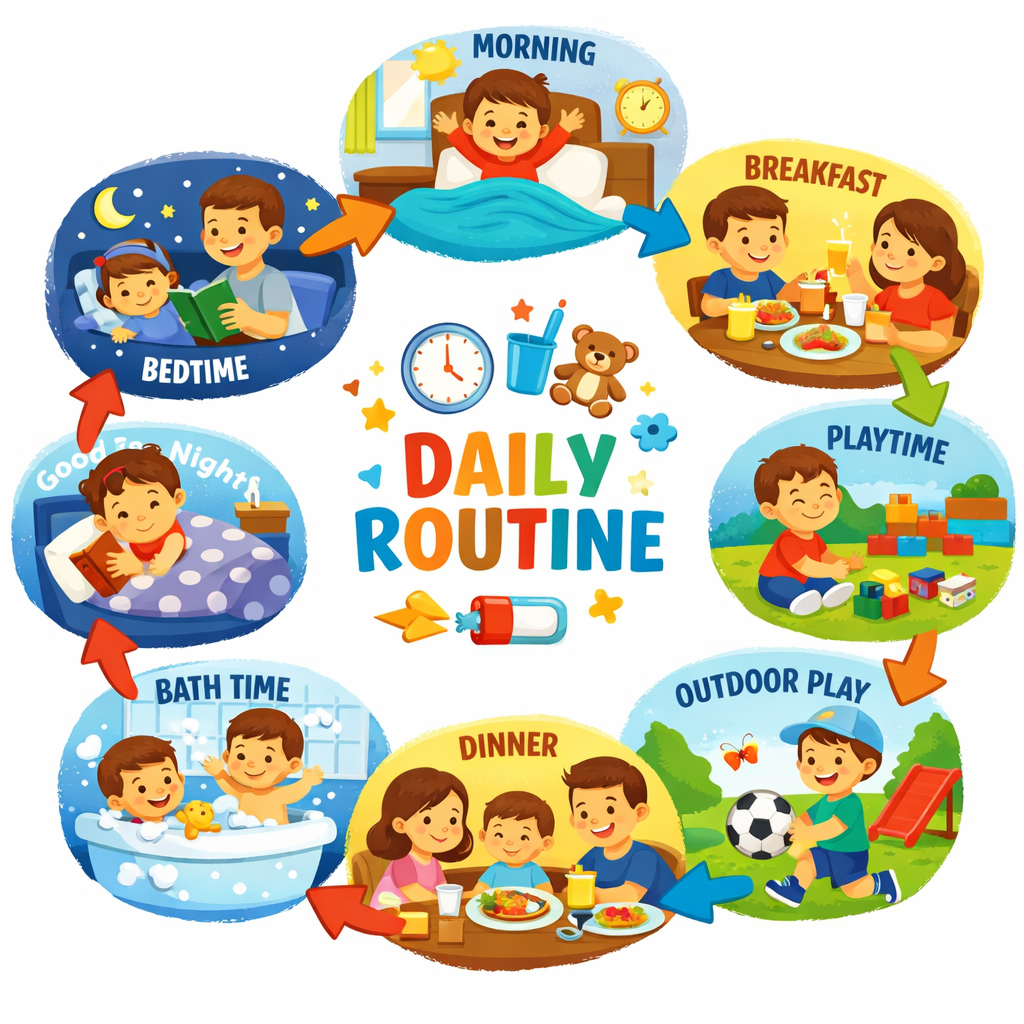
Creating a stable and healthy routine for young children is one of the most valuable gifts parents and caregivers can provide. Routines help children feel secure, develop self-discipline, and understand the flow of the day, which in turn reduces stress for both child and adult. This article will guide you through practical steps to build and maintain a routine that supports your child’s emotional, physical, and cognitive development.
Why Routines Matter for Young Children
Routines provide structure and predictability. When children know what to expect, they feel more secure and confident. This sense of stability allows them to focus on exploring, learning, and growing. Routines also help develop important life skills like time management, responsibility, and independence.
Here are some core benefits of having a routine:
- Emotional security: Knowing what comes next reduces anxiety.
- Better behavior: Children are more likely to cooperate when they understand expectations.
- Improved sleep: Consistent routines help regulate sleep cycles.
- Skill-building: Daily activities become opportunities to develop independence.
Start with the Basics: Anchor Points
You don’t need a minute-by-minute schedule. Instead, create anchor points in the day that remain consistent. These anchor points can include:
- Wake-up time
- Meal and snack times
- Nap or quiet time
- Playtime
- Bath time
- Bedtime
For example, if your child wakes up at 7:00 AM, breakfast could always be at 7:30 AM, followed by playtime at 8:00 AM. These predictable blocks give children a sense of rhythm without being overly rigid.
Morning Routine: Starting the Day Right
A smooth morning sets the tone for the rest of the day. Here are tips for building an effective morning routine:
- Wake up calmly: Avoid rushing. A gentle start helps children transition out of sleep.
- Follow a consistent order: For example, bathroom, get dressed, breakfast, brush teeth.
- Let them help: Even toddlers can pick out clothes or put on their socks.
- Use visual charts: Younger children benefit from pictures showing the steps of the routine.
Mealtime Routines: More Than Just Eating
Meals aren’t just for nourishment — they’re also opportunities to connect and teach healthy habits.
- Eat together: Even one meal a day as a family strengthens bonds.
- Stick to set times: Regular meals help regulate appetite and digestion.
- Encourage participation: Let children help set the table or choose a vegetable.
- Limit distractions: Turn off TVs and devices to focus on the meal and each other.
Nap and Quiet Time: Reset for the Day
Children need downtime to recharge. Whether they still nap or not, having a scheduled quiet time is beneficial.
- Make it predictable: Choose a consistent time daily.
- Create a calm environment: Dim lights, soft music, or a favorite book.
- Don’t force sleep: Even if they don’t nap, a quiet break helps restore energy.
Playtime: Structured and Free Play
Play is the foundation of learning in early childhood. Include both types in your routine:
- Free play: Let your child choose what to do. It encourages creativity and decision-making.
- Structured play: You lead an activity, like a puzzle, craft, or learning game.
- Outdoor time: Whenever possible, include time outside for fresh air and movement.
Evening Routine: Winding Down
A consistent bedtime routine is crucial for good sleep hygiene.
- Same steps each night: Bath, pajamas, teeth brushing, story, and bed.
- Avoid stimulation: No screens at least an hour before bed.
- Create a cozy environment: Dim lights, quiet sounds, and a comfortable sleep space.
Bedtime routines signal to your child’s brain that it’s time to rest, making falling asleep easier.
Flexibility Within Structure
While routines are important, flexibility is essential — especially with young children. Life happens, and it’s okay to shift things around occasionally. What matters is the overall consistency, not perfection.
When disruptions occur:
- Give warnings: Let them know in advance when a change is coming.
- Maintain key elements: Try to keep meal and sleep times consistent, even when traveling or dealing with changes.
Make It Age-Appropriate
Tailor your routine to your child’s developmental stage:
- Toddlers: Keep it simple. Use visual aids and lots of repetition.
- Preschoolers: Offer more involvement and choices within the routine.
- Early school age: Encourage independence and responsibility.
Include Your Child in the Process
Children are more likely to follow routines they helped create. Even very young kids can make simple choices like:
- Which pajamas to wear
- What book to read at bedtime
- Picking between two snacks
This sense of control fosters cooperation and boosts confidence.
Tools That Can Help
Here are some simple tools to support your routine:
- Routine charts: Visual guides with pictures or stickers.
- Timers: Help with transitions, like 10-minute warnings.
- Songs or cues: Use a song to signal it’s time to clean up or brush teeth.
Patience Is Key
Developing a smooth routine takes time, trial, and error. Stay patient and consistent, and don’t expect perfection. Some days will be harder than others, and that’s okay.
When things get off track:
- Take a deep breath
- Reconnect with your child
- Return to the routine gently
A Strong Foundation for the Future
Establishing a healthy routine in early childhood lays the groundwork for success later in life. Children who grow up with structure are more likely to be confident, resilient, and adaptable.
Remember, the goal isn’t a strict schedule, but a rhythm that supports your child’s well-being — and yours too.