
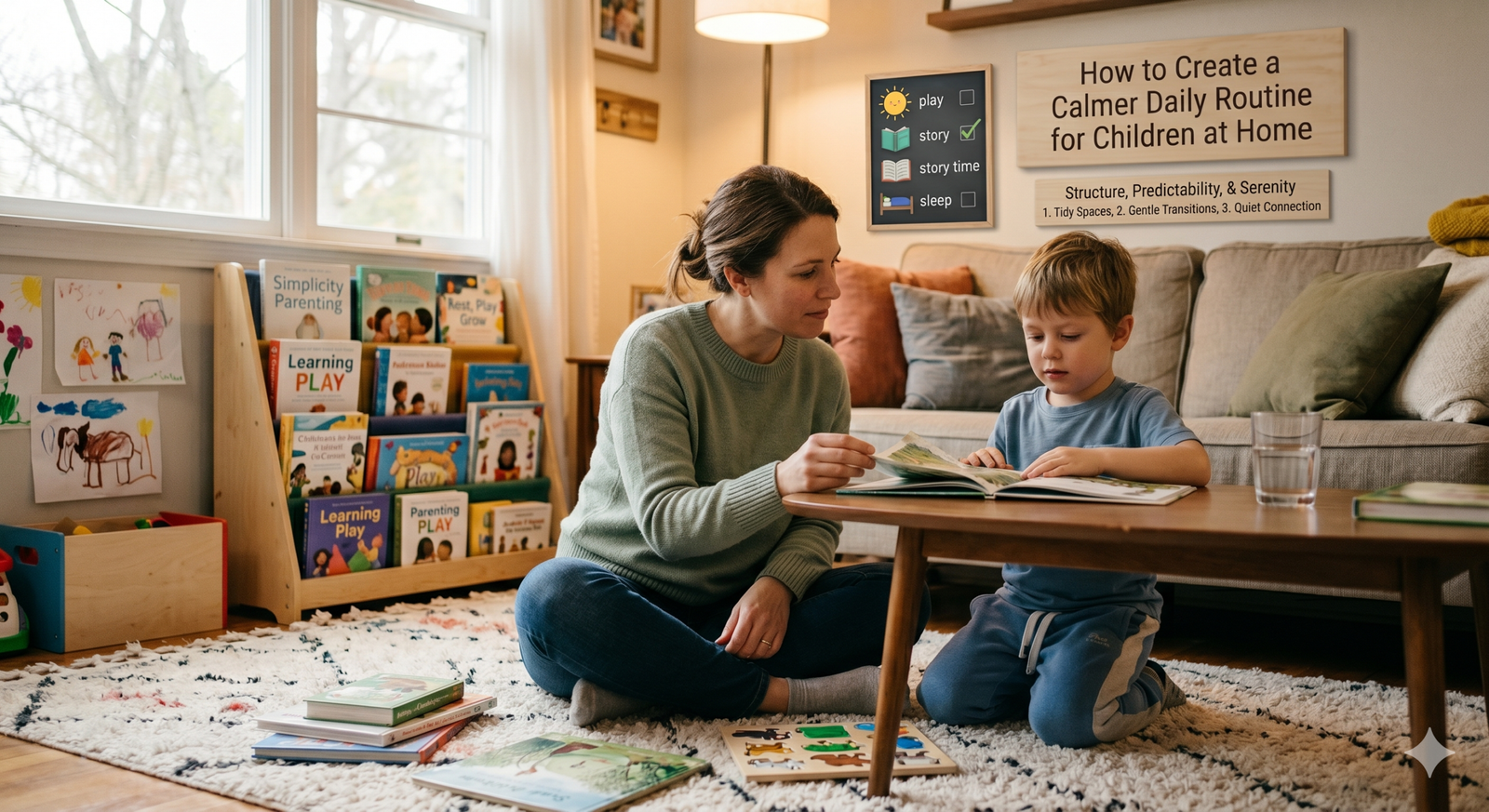
Creating a calmer daily routine for children at home does not mean turning every hour into a strict schedule. A good routine is not supposed to make family life feel heavy, cold, or controlled. Instead, it should help children understand what usually happens during the day, what is expected of them, and how they can participate in simple moments with more confidence.
Children often feel safer when they know what comes next. Predictability can reduce unnecessary stress, especially during busy parts of the day such as mornings, mealtimes, homework time, bath time, and bedtime. For parents and caregivers, a routine can also make the home feel more organized, even when life is naturally full of surprises.
The goal is not perfection. Some days will be messy. Some mornings will start late. Some evenings will not go exactly as planned. That is normal. A calmer routine is built with flexible habits that help the family return to balance after small interruptions.
Start by Observing Your Current Day
Before changing the family routine, it is helpful to observe what already happens at home. Many parents try to create a completely new schedule without understanding where the biggest difficulties are. This can make the process more frustrating than necessary.
Take a simple look at your day. Notice when things usually feel rushed, noisy, or confusing. Is the morning stressful because clothes, backpacks, and breakfast are all handled at the last minute? Is bedtime difficult because children are still full of energy? Are afternoons disorganized because there is no clear transition between school, play, and responsibilities?
You do not need a complicated system. A piece of paper or a note on your phone can be enough. Write down the main moments of the day and mark the parts that often cause tension. This first step helps you understand what needs attention instead of trying to change everything at once.
A calm routine begins with awareness. When you know the main pressure points, you can make small changes that actually fit your family’s real life.
Keep the Routine Simple and Easy to Remember
A routine for children should be clear. If it has too many steps, it can become difficult for everyone to follow. Instead of creating a long list of tasks for every hour, focus on the main parts of the day.
For example, a morning routine might include waking up, getting dressed, having breakfast, brushing teeth, checking the backpack, and leaving the house. That is enough. The purpose is to help the child understand the order of events.
For younger children, visual reminders can be very useful. You can create a simple routine chart with drawings or pictures. Each image can represent one step: pajamas, clothes, breakfast, toothbrush, shoes, backpack. This helps children follow the routine even before they can read well.
Older children can participate by writing the routine with you. When they help create it, they are more likely to respect it. Ask what usually makes mornings or evenings difficult and invite them to suggest simple solutions.
The routine should feel like a guide, not a punishment. Children need structure, but they also need room to learn, make mistakes, and improve gradually.
Prepare Important Things in Advance
One of the easiest ways to make the day calmer is to reduce last-minute decisions. Many stressful moments happen because everyone is trying to find something, choose something, or finish something when there is no time left.
Preparing a few things in advance can change the atmosphere at home. Clothes can be chosen the night before. Backpacks can be checked before bedtime. Lunch boxes, water bottles, or school materials can be placed in a visible area. Shoes can have a specific place near the door.
This does not mean parents must do everything alone. Children can help according to their age and ability. A young child can place shoes in the right spot. An older child can check if homework and school items are ready. These small responsibilities teach organization and independence.
The evening is often a good time for preparation, but it should not become a stressful second shift. Choose only a few tasks that make the next morning easier. Even five minutes of preparation can prevent many problems.
Create Predictable Transitions
Transitions are the moments when children move from one activity to another. For many families, these moments can be challenging. A child may resist stopping playtime, leaving the house, starting homework, taking a bath, or going to bed.
One reason transitions are hard is that children may feel surprised or interrupted. A simple warning can help. Instead of suddenly saying, “Stop playing now,” try giving a short notice: “In ten minutes, we will put the toys away and get ready for dinner.” Then give another reminder when there are five minutes left.
Timers can also be useful because they make time more visible. The timer becomes the signal, not the parent as the “bad guy.” This can reduce arguments and help children understand that activities have a beginning and an end.
Another helpful idea is to connect one activity to the next. For example: “After we put the blocks away, you can choose the cup you want for dinner.” This gives the child a small sense of participation while still moving forward.
Predictable transitions make the routine feel less abrupt. Over time, children begin to understand the rhythm of the day and resist less.
Use Calm and Clear Instructions
The way instructions are given can affect the entire mood of the home. When parents are tired, it is easy to give many instructions at once or repeat them in a frustrated tone. Children may become overwhelmed, ignore the request, or respond with resistance.
Clear instructions work better when they are short and specific. Instead of saying, “Get ready,” say, “Please put on your shoes.” Instead of saying, “Clean this mess,” say, “Please put the blocks in the blue box.”
One instruction at a time is especially helpful for younger children. After the first step is done, move to the next. This makes success easier and reduces confusion.
It also helps to get close to the child before speaking. Calling instructions from another room often leads to repetition and frustration. A calm voice, eye contact, and simple words can make a big difference.
This does not mean parents must sound cheerful all the time. Real life includes tiredness. The goal is to make communication easier by being direct, respectful, and consistent.
Build Small Moments of Connection Into the Day
A calm routine is not only about tasks. Children need connection with the adults who care for them. Sometimes, difficult behavior increases when children feel rushed from one obligation to another without enough positive attention.
Small moments of connection can fit naturally into the routine. A hug after waking up, a short conversation during breakfast, a few minutes of reading before bed, or asking about one good part of the day can strengthen the parent-child bond.
These moments do not need to be long. Even five focused minutes can be meaningful when the adult is truly present. Put the phone aside for a moment, listen carefully, and show interest.
Connection can also make cooperation easier. A child who feels seen and valued may be more willing to follow instructions and participate in family routines.
The home does not need to be perfectly quiet to feel peaceful. Often, a calmer home is one where children know they are loved, heard, and guided.
Make Responsibilities Part of the Routine
Children can contribute to the home in simple ways. When responsibilities are part of the daily routine, they feel more natural and less like sudden demands.
Start with small tasks. A child can put dirty clothes in the laundry basket, place toys in a box, help set the table, feed a pet under supervision, or put books back on a shelf. The task should match the child’s age and ability.
It is important to teach the task patiently. Children may not do it perfectly at first. A poorly folded blanket or a slightly messy toy shelf is still part of learning. If adults redo everything immediately, children may feel that their effort does not matter.
Praise effort more than perfection. Simple words like “Thank you for helping” or “You remembered where the toys go” can encourage participation.
Responsibilities help children feel capable. They also reduce the feeling that parents must carry every small task alone.
Protect Time for Play and Rest
A routine should not be filled only with duties. Children need time to play, imagine, move, and rest. A home routine becomes more balanced when it includes both responsibility and freedom.
Play does not always require expensive toys or planned activities. Children can draw, build with blocks, pretend, read, listen to music, help with simple cooking tasks, or play outside when possible. The important thing is that play has a place in the day.
Rest is also important. Some children need quiet time after school or after a busy outing. This does not necessarily mean sleeping. Quiet time can include looking at books, coloring, listening to calm music, or playing alone for a short period.
When children are constantly rushed, they may become more irritable. A routine with space for rest can help the day feel less tense for everyone.
Keep Mealtimes as Peaceful as Possible
Mealtimes can become stressful when everyone is tired, distracted, or in a hurry. While every family has different habits, creating a simple mealtime routine can help children know what to expect.
You can begin with small rituals. Washing hands before eating, helping place napkins on the table, sitting together when possible, and putting dishes in the sink afterward are examples of simple habits.
Try to keep conversations light when possible. Mealtime does not need to become a moment for corrections, lectures, or arguments. It can be a chance to talk about the day, share something funny, or simply sit together.
Some days, meals will be quick and imperfect. That is part of family life. The goal is to create a basic structure that makes mealtimes feel more organized and welcoming.
Create a Gentle Bedtime Rhythm
Bedtime is one of the most important parts of a child’s daily routine. A calm bedtime rhythm helps children understand that the day is ending. It also gives parents a predictable path to follow instead of deciding everything in the moment.
A simple bedtime routine might include putting toys away, taking a bath, putting on pajamas, brushing teeth, choosing a book, reading together, and saying good night. The same order each night can help children relax.
It is helpful to reduce exciting activities close to bedtime. Loud games, intense screen time, or rushed tasks can make the transition harder. A quieter environment supports a smoother ending to the day.
Children may still ask for more water, another story, or extra time. This is common. A calm and consistent response helps maintain the routine without turning bedtime into a long negotiation.
Bedtime should feel safe and predictable. It is not only about sleeping; it is also a daily opportunity for comfort, affection, and closure.
Adjust the Routine When Life Changes
No routine works forever without changes. Children grow, school schedules change, family responsibilities shift, and new challenges appear. A routine should be reviewed from time to time.
If something is no longer working, do not see it as failure. It may simply mean the family needs a new adjustment. Maybe the morning routine needs more preparation the night before. Maybe homework time needs to happen after a short break. Maybe bedtime needs to start earlier because the current rhythm feels rushed.
Family meetings can help, especially with older children. Ask what part of the day feels difficult and what could make it better. Children often have useful ideas when they are invited to participate.
Flexibility keeps the routine realistic. A good routine supports the family instead of becoming another source of pressure.
A Calmer Home Is Built One Habit at a Time
Creating a calmer routine for children at home is not about controlling every moment. It is about building simple habits that make daily life easier to understand and manage. When children know what comes next, they often feel more secure. When parents have fewer last-minute decisions to make, the home can feel less stressful.
Start small. Choose one part of the day that needs improvement and focus on that first. Maybe it is the morning rush, the after-school transition, or bedtime. Make one or two changes, practice them consistently, and adjust when needed.
A peaceful routine is created through repetition, patience, and connection. Some days will still be noisy or unpredictable, but a strong routine gives the family a path back to calm. Over time, these small daily habits can help children become more confident, cooperative, and independent while making home life more enjoyable for everyone.