How to Help Children Develop Responsibility Without Excessive Pressure
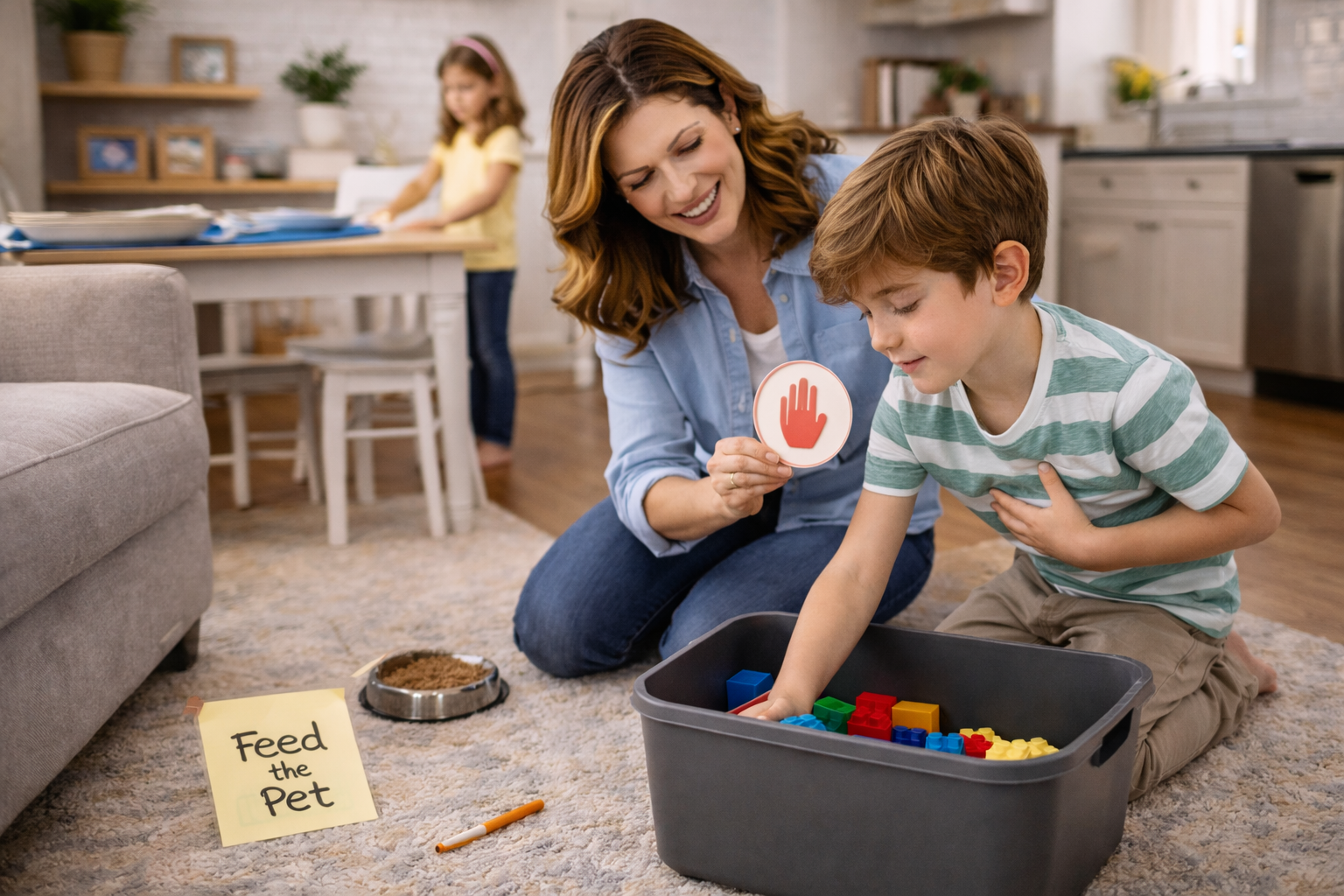
Responsibility is a skill that develops over time, not something children suddenly “have” at a certain age. Many adults want children to be responsible, but when responsibility is taught through pressure, fear, or constant criticism, it often leads to anxiety, avoidance, or rebellion. Healthy responsibility grows when children feel capable, supported, and trusted. It is … Ler mais
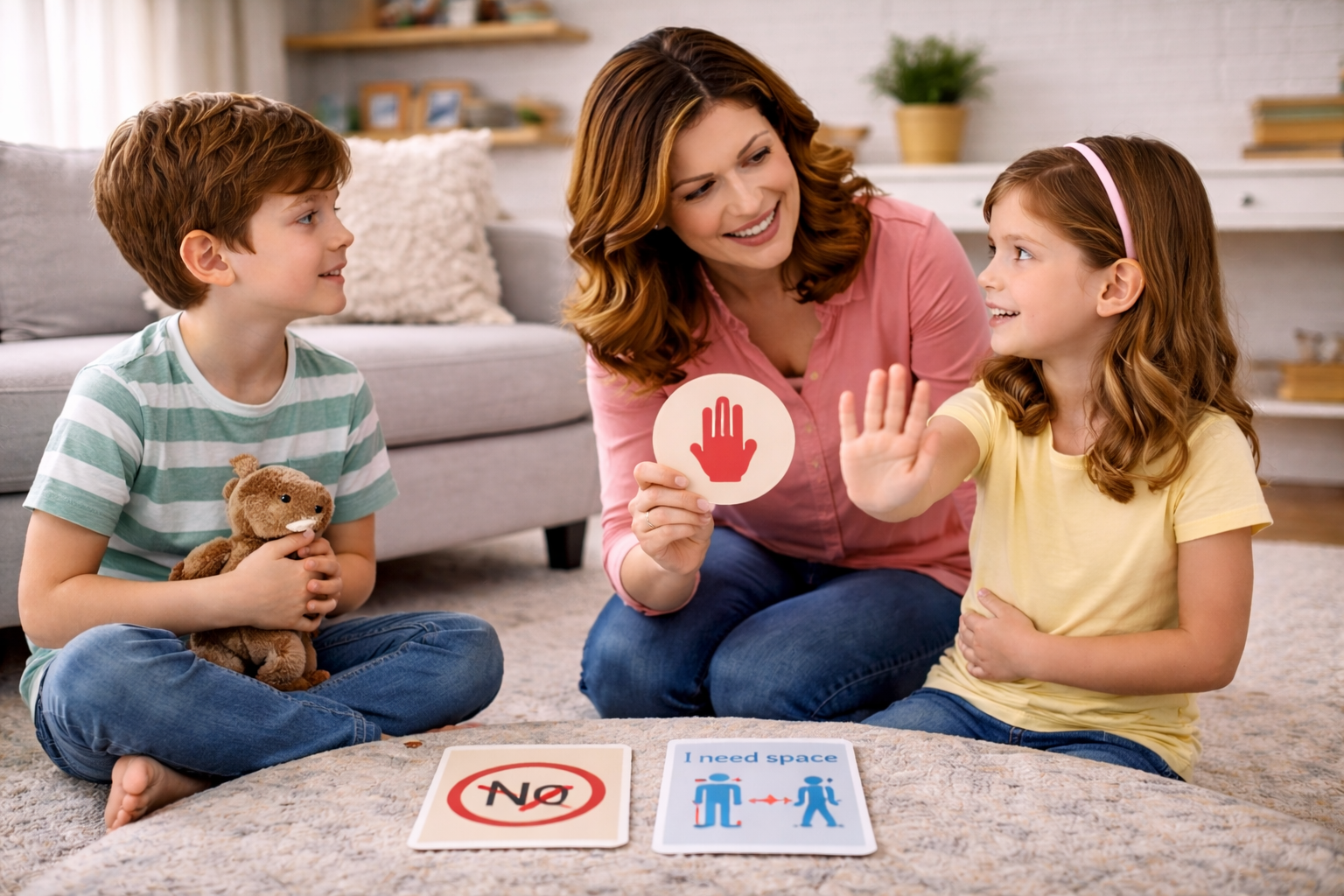

How to Help Children Develop Healthy Boundaries with Others

Healthy boundaries are essential for children’s emotional well-being, relationships, and self-respect. Children who understand boundaries are better able to protect themselves, respect others, communicate needs, and navigate social situations with confidence. Boundaries are not about being rigid, rude, or distant. They are about understanding personal limits — physical, emotional, and social — and learning how … Ler mais

How to Help Children Develop Self-Control Without Suppressing Emotions

Self-control is one of the most important skills children develop — but it is also one of the most misunderstood. Many people associate self-control with silence, obedience, or emotional suppression. In reality, healthy self-control has nothing to do with ignoring feelings and everything to do with managing them safely. Children are not born with self-control. … Ler mais

How to Help Children Handle Transitions Without Stress or Resistance

Transitions are one of the most challenging parts of a child’s day. Moving from playtime to bedtime, from home to school, from one activity to another — these moments often trigger resistance, frustration, or emotional outbursts. What looks like stubbornness is usually a child struggling to shift focus, expectations, and emotional state. Children are not … Ler mais

How to Set Healthy Screen-Time Boundaries Without Daily Battles

Screens are part of modern childhood. Phones, tablets, TVs, and computers are everywhere, and for many families, screen time is woven into daily routines. The real challenge is not whether children use screens, but how screen time is managed — and how much conflict it creates. Daily arguments over screens usually leave parents exhausted and … Ler mais

How to Create Calm, Cooperative Mornings With Kids (Without Yelling)

Mornings can feel like a daily race: waking up, getting dressed, eating something, finding shoes, packing bags, and getting out the door—often while kids move slowly, get distracted, or resist every step. If you’ve ever thought, “Why is this so hard every single day?” you’re not alone. Morning stress is one of the most common … Ler mais

How to Help Children Build Emotional Awareness from an Early Age

Emotional awareness is the ability to recognize, understand, and name emotions — both in oneself and in others. It is one of the most important foundations for emotional intelligence, self-regulation, empathy, and healthy relationships later in life. Children are not born with full emotional awareness. They develop it gradually through daily interactions, guidance, and example. … Ler mais

How to Help Children Develop Empathy Through Everyday Interactions

Empathy is the ability to understand and care about how others feel. It is one of the most important social and emotional skills children can develop, shaping how they build relationships, resolve conflicts, and interact with the world around them. Empathy is not something children are born fully knowing how to practice. It develops gradually … Ler mais

How to Teach Children Accountability Without Shame or Fear

Accountability is an essential life skill. Children who learn accountability understand that their actions have consequences, that mistakes can be repaired, and that responsibility is part of healthy relationships. However, accountability is often confused with punishment, blame, or shame — approaches that may produce obedience but damage emotional growth. True accountability is taught through guidance, … Ler mais

How to Teach Children Patience in a Fast-Paced World

Patience is a skill that has become increasingly difficult to develop in a world of instant results, fast entertainment, and constant stimulation. Children grow up surrounded by immediate responses — screens load quickly, answers appear instantly, and waiting often feels unnecessary or frustrating. Yet patience remains one of the most important life skills children can … Ler mais